The animal kingdom continues to surprise scientists with newly discovered behaviors in 2025, revealing complex social interactions, unexpected intelligence, and previously unknown communication methods. These findings challenge old assumptions about animal cognition and social structures.
Mouse “First Aid”: Caring Beyond Instinct
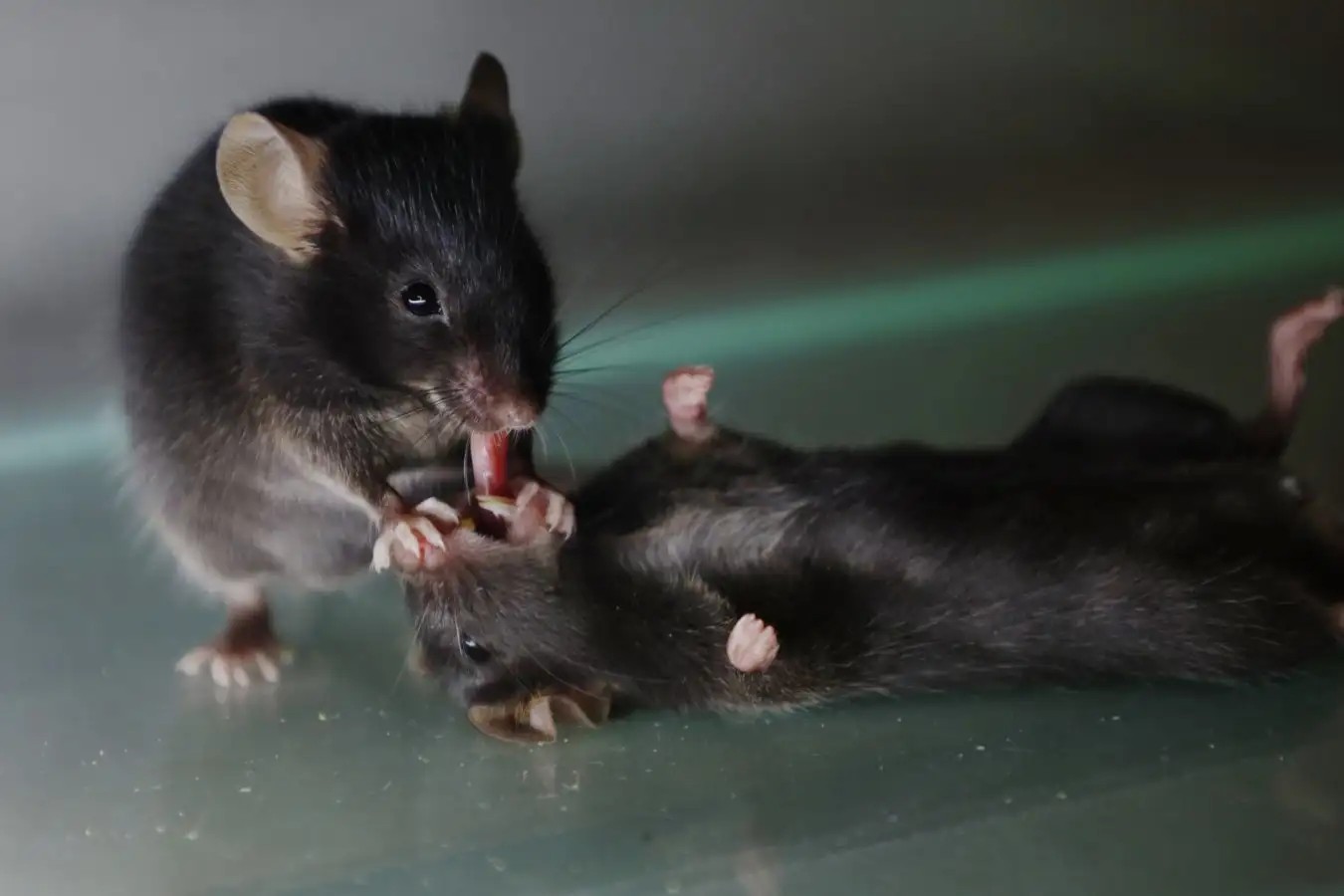
Researchers observed a remarkable behavior in mice: apparent attempts to revive unconscious cage mates. Mice were seen tugging at the tongues of unresponsive peers, seemingly trying to clear their airways. This suggests that care-giving behavior may be far more prevalent in rodents than previously thought. This challenges the notion that such actions are exclusive to more complex species. It raises questions about the evolutionary roots of empathy and reciprocal care within mammalian communities.
Dolphins Communicate with Urine: A Unique Signaling System
Male Amazon river dolphins engage in an unusual form of communication: spraying urine into the air. The behavior appears to transmit signals to other dolphins, potentially mimicking scent-marking in land mammals. Other males actively seek out the urine as it falls, suggesting a deliberate olfactory exchange. This discovery highlights the diversity of communication methods in aquatic species. It opens new avenues for understanding how dolphins navigate complex social hierarchies.
Birds Unite Against Parasites: Collective Alarm Calls
More than 20 bird species have been found to use a distinctive “whining” alarm call to warn each other about the presence of cuckoos. These parasitic birds sneakily lay eggs in other species’ nests, avoiding parental duties. The coordinated response demonstrates an advanced form of collective intelligence. This behavior suggests that birds can recognize and react to specific threats through shared vocal signals.
Weaver Ants: Teamwork Beyond Strength
Weaver ants exhibit extraordinary collaborative strength. They form chains to manipulate objects, including leaves for nest-building. Individual ants can pull up to 60 times their own weight, but when working in teams of 15, they can move over 100 times their combined weight. This exemplifies the power of collective effort in insect societies. The findings underscore how coordinated action amplifies physical capabilities.
First-Ever Live Colossal Squid Footage: A Juvenile Giant
The Schmidt Ocean Institute captured the first-ever live footage of a colossal squid. While these creatures are known to grow up to 7 meters, the individual filmed was a juvenile, measuring just 30 centimeters long. This rare glimpse into deep-sea life provides valuable data for studying squid behavior. The discovery confirms that colossal squid remain elusive and poorly understood, even with advances in ocean exploration.
Octopus Illusion: Shared Cognitive Quirks with Humans
Scientists discovered that octopuses can be tricked by visual illusions in the same way humans are. An octopus was fooled into believing a fake arm, made of gel, was its own. This suggests a fundamental similarity in how cephalopods and humans process sensory information. The finding blurs the lines between invertebrate and vertebrate perception.
These discoveries from 2025 underscore the vastness of what remains unknown about animal behavior. Each finding challenges existing assumptions and invites deeper exploration into the cognitive and social worlds of other species.