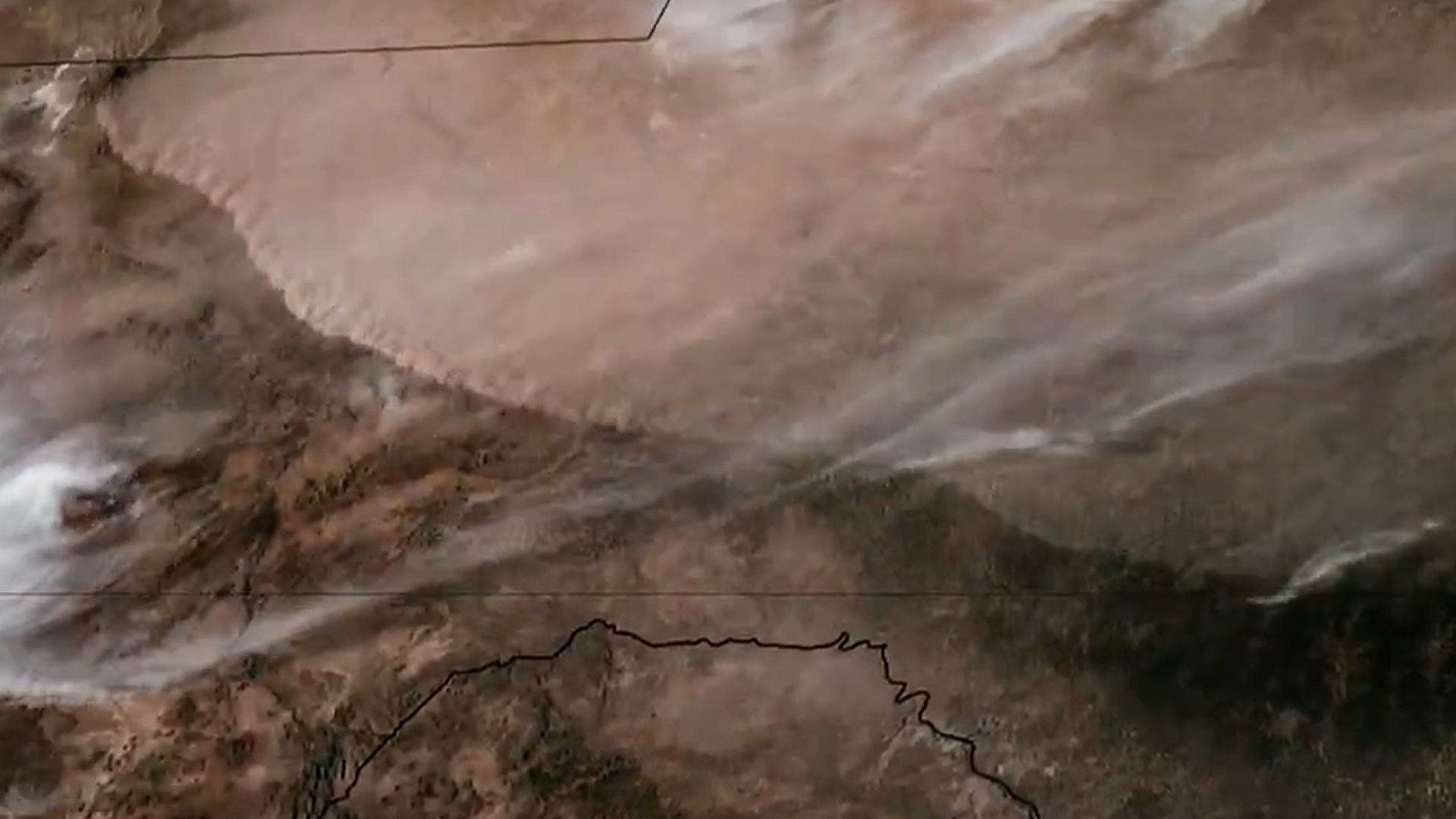
A massive wall of dust swept across West Texas on Monday, March 16, 2026, as a powerful cold front moved through the United States. The event was captured in striking detail by the GOES-19 weather satellite, operated by the National Oceanic and Atmospheric Administration (NOAA). The satellite imagery reveals a distinct line of dust being propelled southward, clearly visible below higher-altitude cloud formations.
The Storm’s Origins: Winter Storm Iona
The dust storm was a direct result of Winter Storm Iona, a severe weather system that impacted much of the U.S. from March 14 to 16. Iona brought record snowfall to the Midwest and triggered damaging winds and tornadoes across the southern states. The cold front associated with the storm acted as the driving force behind the dust surge in Texas.
Travel Disruptions and Visibility Concerns
The intense dust storm caused significant disruptions, particularly for travelers. At least one major multi-vehicle accident was reported due to near-zero visibility conditions. The airborne dust created hazardous conditions across West Texas, prompting warnings and travel advisories.
A Rare Sight from Space
Experts at Colorado State University’s Cooperative Institute for Research in the Atmosphere (CIRA) called the satellite imagery “spectacular.” Visible dust lines of this magnitude are uncommon, making the event particularly noteworthy. The clarity of the imagery highlights the scale and intensity of the storm.
The combination of a strong cold front and dry conditions created ideal circumstances for this dust event. Such storms serve as a stark reminder of the power of atmospheric forces and their potential impact on ground-level conditions.
This rare view from space underscores the dramatic weather patterns shaping the American landscape.