New genetic and proteomic research confirms that the Japanese Archipelago wasn’t a refuge for tigers, as previously thought, but for cave lions (Panthera spelaea ) between 73,000 and 20,000 years ago. This discovery reshapes our understanding of Pleistocene megafauna distribution in East Asia and adds a new layer to the story of apex predator evolution.
The Misidentified Apex Predator
For decades, large felid fossils found in Japan were attributed to tigers. However, a recent study re-examined 26 subfossil remains using advanced molecular and protein analysis. The results were definitive: all viable samples yielded genetic markers matching cave lions, a species previously thought to have been absent from the Japanese islands.
The study employed mitochondrial and nuclear genome sequencing, Bayesian molecular dating, and radiocarbon dating to confirm the taxonomic identity of the remains. Paleoproteomics further supported the findings, identifying a unique amino acid variant found only in lions.
A Pleistocene Land Bridge
The presence of cave lions in Japan is explained by the existence of a land bridge connecting the archipelago to mainland Asia during the Last Glacial period. This allowed lions to disperse eastward, reaching even the southwestern islands despite habitats generally considered more suitable for tigers. The animals coexisted with other large mammals like wolves, brown bears, and early humans, forming a unique Pleistocene ecosystem.
Lions and Tigers: A Shifting Balance
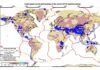
The discovery challenges the traditional view of lion-tiger distribution. These apex predators likely competed for resources and shaped the evolution of other species in Eurasia for over two million years. Lions dispersed out of Africa approximately one million years ago, expanding their range and eventually overlapping with tigers.
Today, their ranges no longer intersect due to human-driven habitat loss and species contraction. But during the Late Pleistocene, the “lion-tiger transition belt” stretched across Eurasia, creating frequent interactions between the two species. Japan, at the eastern edge of this zone, now appears to have been a key lion stronghold.
Persistence and Extinction
The study suggests that cave lions persisted in Japan for at least 20,000 years after their extinction in other parts of Eurasia and potentially for another 10,000 years after their disappearance from eastern Beringia. This raises questions about why they vanished from Japan while lingering elsewhere for so long. Further research into subfossil remains across Eurasia will be crucial to understanding species range dynamics and the oscillation of the lion-tiger belt.
“This study rewrites the Pleistocene history of Japan, proving that cave lions, not tigers, were the dominant large feline predator in the archipelago,” concluded the researchers.
The findings were published in the Proceedings of the National Academy of Sciences on January 26, 2026.