


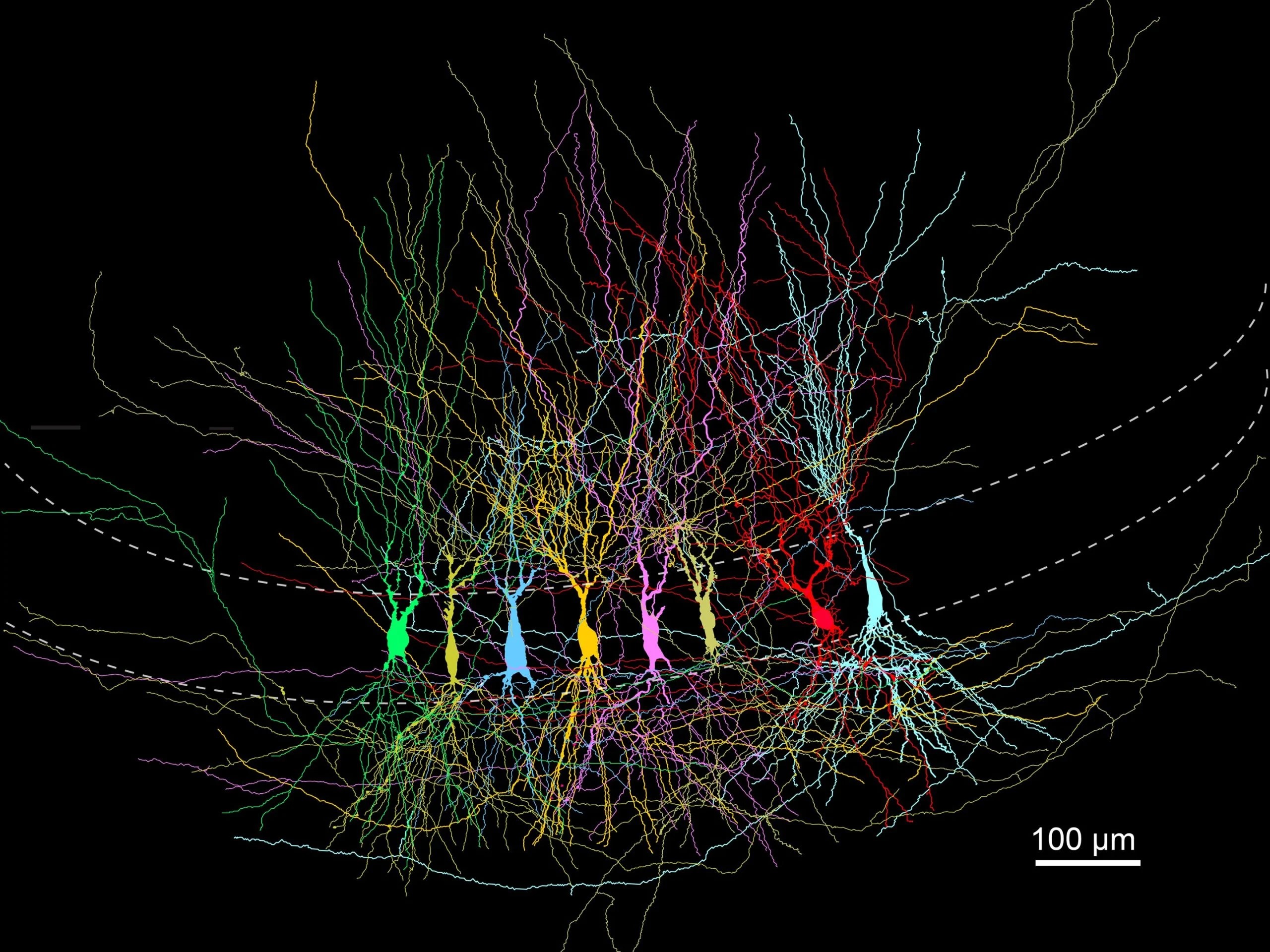
The prevailing assumption about how the brain learns is that it functions like a blank slate, gradually accumulating information through new neural connections. However, new research suggests a counterintuitive reality: for certain critical memory circuits, the brain begins life overloaded with connections and must systematically prune them to function effectively.
This “full slate” approach challenges the traditional tabula rasa (blank slate) model of development. Instead of starting empty and filling up, the hippocampus—the brain’s hub for memory and navigation—starts with a dense, chaotic web of links that streamlines into a precise, efficient network as an individual matures.
The “Full Slate” Hypothesis
For decades, scientists have debated whether biological development follows a tabula rasa model, where experiences write onto an empty canvas, or a tabula plena (full slate) model, where genetics provide a pre-filled framework that experience refines.
Researchers at the Institute of Science and Technology Austria (ISTA), led by Professor Peter Jonas and Magdalena Walz, applied this philosophical question to neuroscience. They focused on the CA3 region of the hippocampus, a circuit essential for converting short-term experiences into long-term memories and enabling spatial orientation.
The central question was straightforward: Does this memory circuit start empty and grow denser with age, or does it start dense and become sparser?
From Chaos to Order
To answer this, ISTA researcher Victor Vargas-Barroso examined mouse brains across three key developmental stages:
* Early infancy: Days 7–8 after birth
* Adolescence: Days 18–25
* Adulthood: Days 45–50
Using advanced techniques, including patch clamp electrophysiology to measure electrical signals and high-precision laser microscopy to visualize cellular activity, the team mapped the connections between CA3 pyramidal neurons.
The results were striking:
1. Infancy: The neural network was extremely dense, with connections appearing widespread and somewhat random.
2. Maturation: As the mice aged, the network did not grow denser. Instead, it became significantly sparser and more structured.
“Intuitively, one might expect that a network grows and becomes denser over time. Here, we see the opposite. It follows what we call a pruning model: it starts out full, and then it becomes streamlined and optimized,” explains Peter Jonas.
This process, known as synaptic pruning, involves the elimination of unnecessary neural connections to increase the efficiency of neuronal signalling. The brain essentially deletes the “noise” to let the “signal” shine through.
Why Start Overloaded?
If the end goal is an efficient, sparse network, why not start that way? The researchers suggest that an initially “exuberant” connectivity serves a vital functional purpose during early development.
The hippocampus does not merely store isolated sensory data (like a sound or a smell); it integrates multiple inputs into coherent memories and experiences. This integration requires rapid, broad communication between neurons.
- Efficiency in Integration: A dense, initial network allows neurons to communicate quickly and broadly, facilitating the complex task of combining disparate sensory inputs.
- The Cost of a Blank Slate: If the hippocampus began as a true tabula rasa, neurons would first need to spend time locating and establishing connections with one another. This would delay and potentially hinder the efficient communication required for early learning.
By starting with a rich, albeit chaotic, web of connections, the brain ensures that the infrastructure for communication is already in place. The subsequent pruning process then refines this infrastructure, removing redundant links to create a specialized, high-performance memory circuit.
Implications for Understanding Memory
This finding shifts the paradigm of how we view neural development. It suggests that memory formation is as much about subtraction as it is about addition.
The study highlights that the brain’s architecture is not built brick by brick from nothing, but rather sculpted from a pre-existing mass. This “pruning model” may explain how the brain balances the need for rapid early integration with the need for long-term precision and efficiency.
Conclusion
The hippocampus does not begin as an empty vessel waiting to be filled with experience. Instead, it starts as a densely connected, “full” network that undergoes selective pruning to achieve optimal memory function. This discovery underscores that neural efficiency is achieved through strategic elimination, offering a new perspective on how the brain organizes the past to navigate the future.


