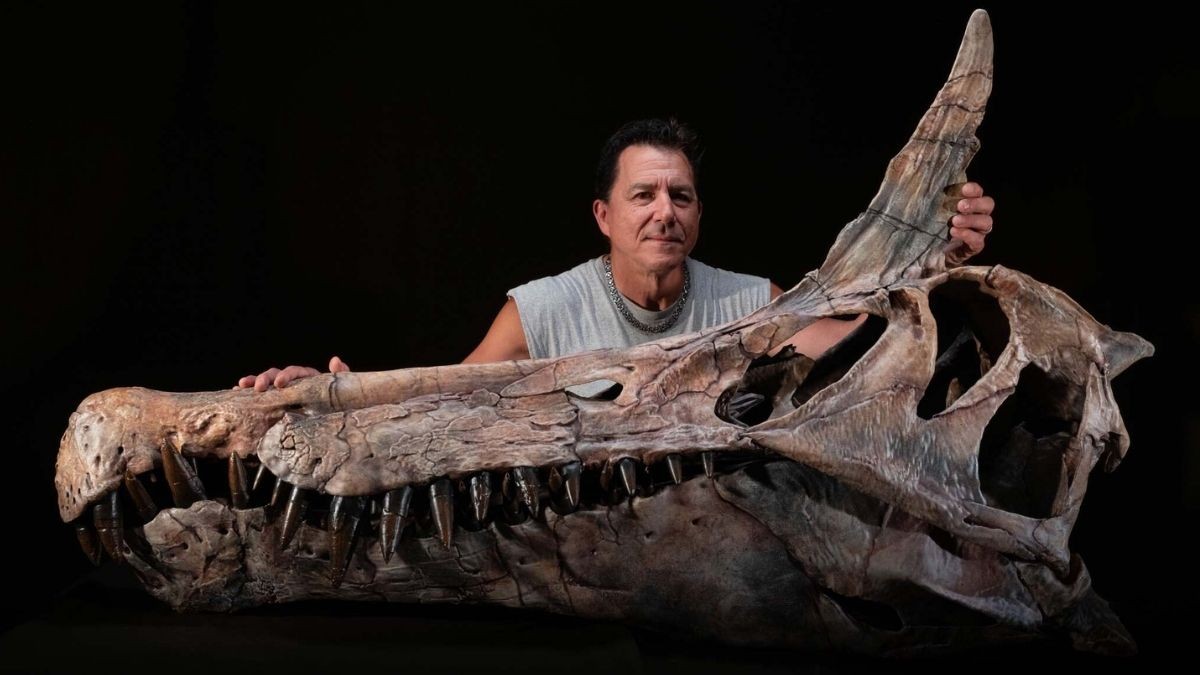
A newly discovered species of Spinosaurus, named Spinosaurus mirabilis (“wonderful spine lizard”), is challenging long-held assumptions about where and how these massive predators lived. The fossil, unearthed in the inland deserts of Niger, boasts a unique, never-before-seen crest on its skull and offers compelling evidence that these dinosaurs were not strictly coastal creatures.
A Dinosaur Out of Place
For decades, Spinosaurus fossils have been almost exclusively found in ancient coastal environments. This led scientists to believe they were primarily fish-eaters adapted to swampy, shoreline habitats. S. mirabilis, however, was discovered hundreds of kilometers from any ancient coastline, deep within what is now the Sahara Desert.
This raises fundamental questions: how did a semi-aquatic predator end up so far inland? The answer may lie in ancient river systems that once snaked through the region, supporting a lush, forested ecosystem. The discovery site also yielded remains of long-necked dinosaurs, suggesting S. mirabilis shared its habitat with other large herbivores.
The “Hell Heron” of the Sahara
Paleontologist Paul Sereno describes the new species as a “hell heron” – a fitting nickname for a dinosaur that likely waded through waist-deep water hunting for massive fish. Its teeth, like those of modern crocodiles, were serrated and interlocking, perfect for gripping slippery prey. The team assembled 3D models of the skull on solar-powered laptops in the middle of the desert, cementing the significance of the find.
The Crest: A Mystery of Display
The most striking feature of S. mirabilis is its elaborate, scimitar-shaped crest. While its exact purpose remains unknown, scientists speculate it was covered in keratin and possibly brightly colored, like a toucan’s bill. This suggests the crest may have been used for visual displays – perhaps for attracting mates or intimidating rivals.
The discovery of Spinosaurus mirabilis not only expands our understanding of dinosaur diversity but also highlights how much remains to be learned about these ancient creatures. The Sahara, once thought to be an unlikely place to find a semi-aquatic predator, may yet hold even more surprises.