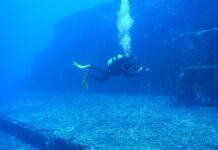
An unprecedented international treaty to safeguard marine life in the world’s oceans has officially become law. This landmark agreement, known as the High Seas Treaty, establishes the first-ever framework for protecting international waters – the vast areas beyond national jurisdiction that cover nearly half of the planet.
Decades in the Making
For over two decades, the United Nations debated the necessity of such a treaty, with formal negotiations commencing in 2017. The finalized text empowers nations to establish environmentally protected zones in international waters and regulates emerging ocean industries. This is significant because previously, these areas operated largely as a “wild west” with minimal oversight, leaving marine ecosystems vulnerable to exploitation.
Context: Why This Matters Now
The treaty’s ratification comes at a critical moment. While the agreement is in effect, the United States has yet to join. Meanwhile, the International Seabed Authority (ISA) continues to deliberate on rules for deep-sea mining, a controversial practice that could irreparably damage fragile ecosystems. The ISA has not yet approved any commercial deep-sea mining operations, but applications are under review. This treaty’s existence puts added pressure on the ISA to proceed cautiously.
The Path to Implementation
The treaty officially came into effect after Morocco became the 60th nation to ratify it in September, triggering a 120-day countdown. As of today, 83 countries have ratified the agreement. While international laws are notoriously difficult to enforce, the treaty represents a clear commitment from participating nations to cooperate and uphold its terms.
A Biodiversity Milestone
The treaty’s creation was driven by the 2022 UN agreement to protect 30% of Earth’s land and oceans by 2030, a critical biodiversity goal. Currently, less than 10% of the high seas – which comprise two-thirds of all ocean area – is protected. As Ambassador Rena Lee of Singapore, who led the final negotiations, stated, this treaty is “a rare opportunity to make a positive difference.”
“This is a game changer,” said Rebecca Hubbard, director of the High Seas Alliance. “And in many ways, the work is just beginning.”
This treaty marks a turning point for ocean conservation, though the true test lies in its effective implementation and enforcement. The future of marine ecosystems depends on sustained international cooperation and a willingness to prioritize long-term sustainability over short-term economic gains.