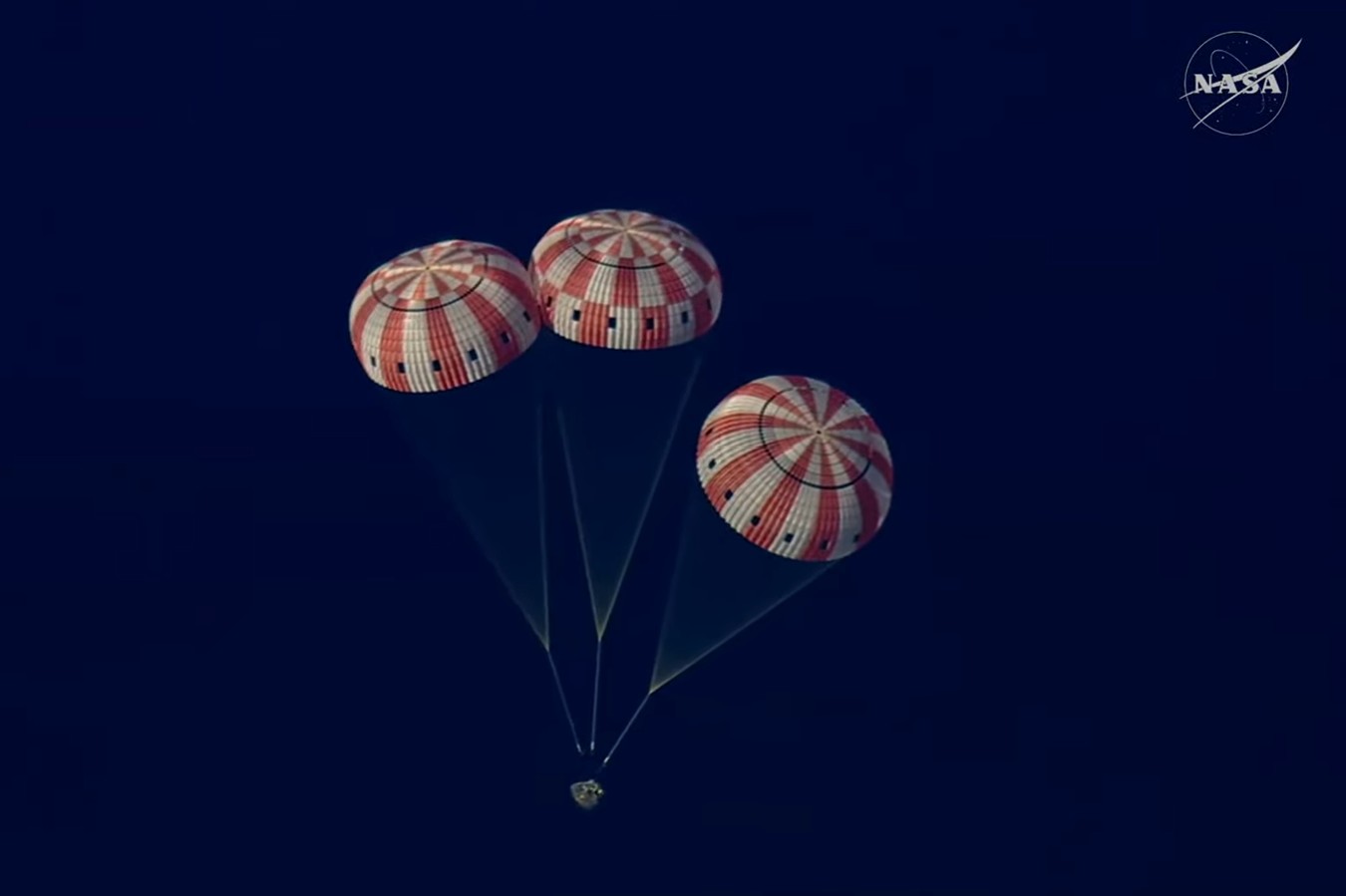
The long hiatus of human lunar exploration has officially ended. Following a historic journey that took them further from Earth than any human has ever traveled, the crew of NASA’s Artemis II mission successfully splashed down off the coast of California on 10 April.
Commanded by Reid Wiseman, the crew—which included Victor Glover, Christina Koch, and Canadian astronaut Jeremy Hansen—returned to Earth after a mission that pushed the boundaries of both technology and human endurance. Upon landing, Wiseman reported “four green crew members,” a standard aviation term signaling that all personnel were healthy and ready for recovery.
Breaking Records and Testing Limits
Artemis II is not merely a symbolic return; it is a vital technical milestone. This mission marks the first time humans have ventured into deep space toward the Moon since the Apollo 18 mission in 1972.
During the flight, the Orion capsule reached a distance of 406,771 kilometers from Earth. This feat surpassed the previous record set by the Apollo 13 crew in 1970, proving that modern spacecraft can handle the rigors of long-duration, deep-space transit.
Scientific Discoveries: The Moon’s Hidden Colors
While the mission served as a rigorous test of the Orion capsule’s systems, it also provided a wealth of “boots-on-the-ground” perspective from orbit. The crew acted as high-altitude observers, noting details that remote sensors often miss:
- Lunar Composition: Far from Earth, the Moon appears monochromatic grey. However, the astronauts observed subtle hues of green, brown, and orange on the surface. These color variations are critical clues for scientists attempting to map the chemical composition and geological history of the lunar surface, particularly on the far side.
- The “Earthshine” Phenomenon: The crew experienced the intense brightness of earthshine —sunlight reflecting off our planet. The glare was so significant that the astronauts had to cover a window with a spare shirt to manage the light, highlighting a practical need for dedicated window shades in future spacecraft designs.
- Impact Flashes: One of the mission’s specific scientific objectives was to observe “impact flashes”—brief sparks of light caused by meteorites striking the lunar surface. By monitoring these, NASA can better assess the risk of meteorite impacts for future astronauts living on the Moon.
“It’s those kind of nuanced observations that could ultimately inform future landed missions… to understand where we can go to maximize the scientific value,” noted Kelsey Young, NASA’s Artemis science lead.
The Path to a Sustained Lunar Presence
The success of Artemis II sets the stage for a new era of lunar exploration, though the roadmap is evolving. NASA has recently shifted its strategy to be more “nimble,” adjusting the upcoming mission profiles:
- Artemis III (Planned for 2027): Rather than a direct landing, this mission will focus on testing the Orion capsule’s ability to dock with lunar landers in Earth’s orbit.
- Artemis IV (Planned for 2028): This mission is currently slated to be the next step toward actual lunar landings.
This shift reflects a broader geopolitical and scientific trend. Both NASA and China are moving away from the idea of temporary orbital stations in favor of permanent lunar bases. The ultimate goal is to transform lunar travel from a rare, high-risk event into a routine endeavor, similar to current trips to the International Space Station.
Conclusion
Artemis II has successfully bridged the gap between the Apollo era and a future of sustained lunar habitation. By proving that humans can safely travel deep into space and gather critical geological data, NASA has cleared a major hurdle in the race to establish a permanent human presence on the Moon.