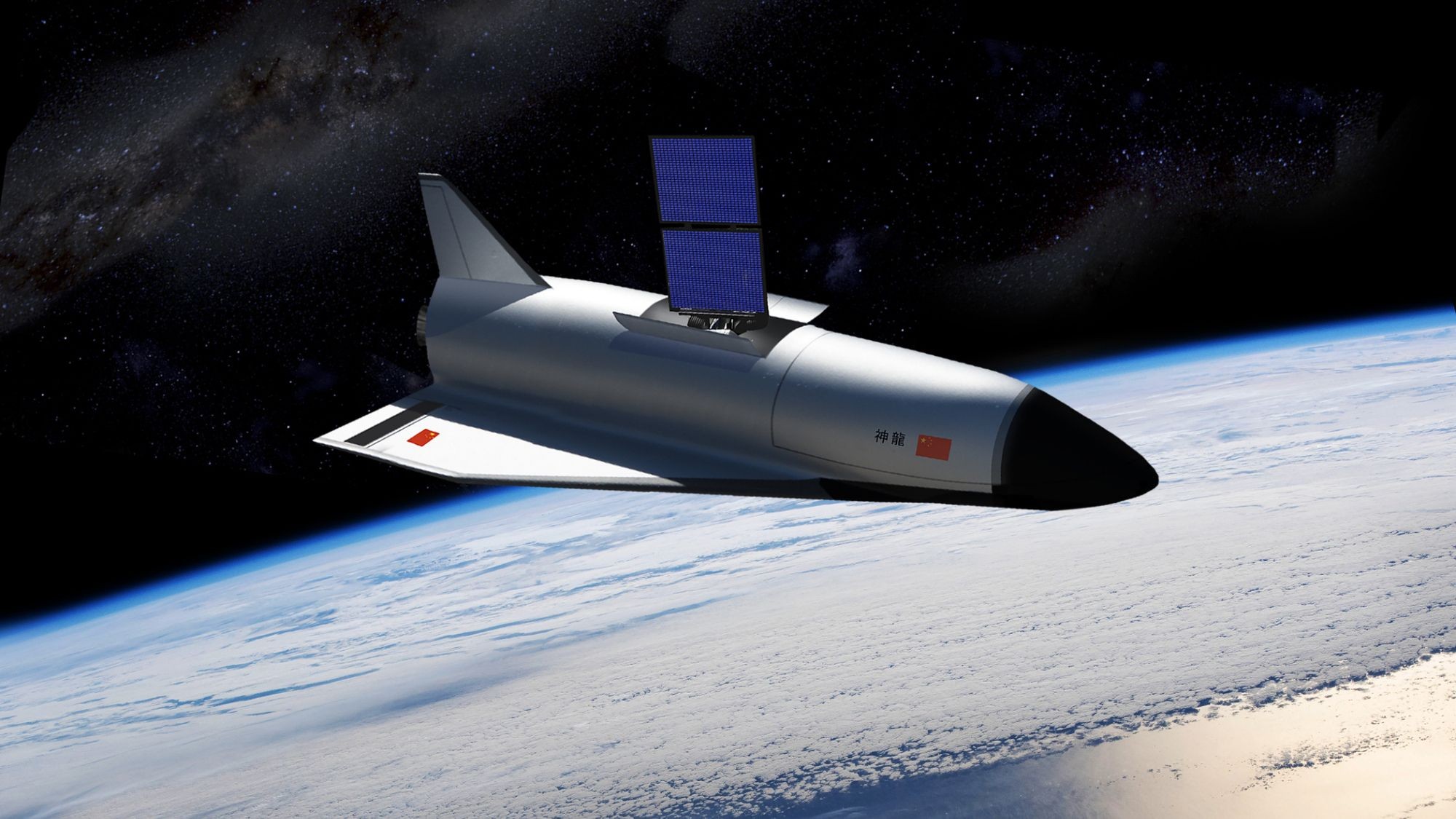
China’s reusable space plane, known as Shenlong (“Divine Dragon”), has recently completed its fourth orbital mission, sparking renewed interest in its capabilities and objectives. While official statements from the Chinese government remain vague, stating that Shenlong tests technologies for “more convenient and affordable space access,” the reality is likely far more complex. This secrecy mirrors the approach taken by the United States with its own X-37B space plane, raising questions about the true nature of both programs.
The Mystery of Shenlong’s Missions
Shenlong launched from the Jiuquan Satellite Launch Center in the Gobi Desert on February 6th, continuing a pattern of orbital flights dating back to 2020. Previous missions lasted from two days to nearly a year, with minimal public disclosure about their operations. The Chinese government’s lack of transparency fuels speculation about the program’s purpose, especially given its demonstrated ability to deploy objects into orbit.
Unlike the U.S. X-37B, which has generally avoided direct interactions with other satellites, Shenlong has actively rendezvoused and released payloads on each of its three previous flights. These deployments included satellites with transmission and independent propulsion capabilities, confirmed not by China, but by U.S. military tracking, private space awareness companies, and amateur astronomers. This behavior suggests a focus on in-space servicing, inspection, or potentially even interference with other spacecraft.
The Growing Importance of Rendezvous and Proximity Operations (RPOs)
The ability to perform Rendezvous and Proximity Operations (RPOs) is rapidly becoming a critical skill in modern space warfare. Mastery of RPO technology allows nations to refuel, repair, and upgrade their own satellites, as well as inspect or tamper with adversaries’ assets. According to Victoria Samson, chief director of space security and stability at the Secure World Foundation, “If you want to have space superiority, you need to be able to conduct RPOs.”
This capability is not unique to China; both Russia and the United States are actively developing similar technologies. However, Shenlong’s demonstrated proficiency in RPOs raises concerns about its potential use for anti-satellite purposes. While some experts dismiss the idea of Shenlong as a weapon delivery system due to its limited payload capacity, its ability to interact directly with other spacecraft remains a significant point of interest.
Why Transparency Matters
The lack of transparency surrounding both Shenlong and the X-37B programs breeds mistrust and encourages worst-case scenario thinking. Samson argues that “a little more transparency would help fill in some of the blanks,” allaying unnecessary fears. The ambiguity surrounding these missions is deliberate, but the consequences extend beyond national security: it complicates international cooperation in space and fuels an arms race mentality.
Shenlong’s orbital activities, combined with China’s broader advancements in space technology, demonstrate a clear intent to dominate space operations. The program serves as a reminder that the future of space is increasingly contested, and that secrecy will continue to define the behavior of major powers in orbit.