Scientists are preparing to launch a groundbreaking mission to observe one of Earth’s most vital yet elusive defenses: the magnetosphere. Led by researchers from the Mullard Space Science Laboratory (MSSL) in Surrey, the project aims to capture high-resolution images of the “magnetic bubble” that protects our planet from solar radiation.
The SMILE Mission: Observing the Invisible
The project, officially named SMILE (Solar wind Magnetosphere Ionosphere Link Explorer ), involves deploying a spacecraft into an orbit more than 120,000 km (74,564 miles) above the North Pole.
Unlike traditional observation methods, SMILE will use a unique technique to “see” the magnetosphere. It will detect X-rays emitted by particles released by the sun—a phenomenon known as solar wind. By tracking these X-rays, the mission can effectively map the boundary where the solar wind meets Earth’s magnetic field.
Why This Matters for Space Exploration
While scientists have long relied on mathematical models and theoretical frameworks to understand how the sun interacts with Earth, there has been a significant gap in direct, visual evidence.
“We have never done anything like this before,” says Dr. Colin Forsyth, a lead investigator on the project. “We have lots of models and theoretical frameworks, but now we get to see what’s going on.”
This mission is critical for several reasons:
– Visualizing the Boundary: It will provide the first real-time images of the edge of our magnetic shield.
– Predicting Space Weather: By understanding how solar winds impact our magnetosphere, scientists can better predict “space weather”—disturbances in the magnetic environment that can disrupt satellites, GPS, and power grids.
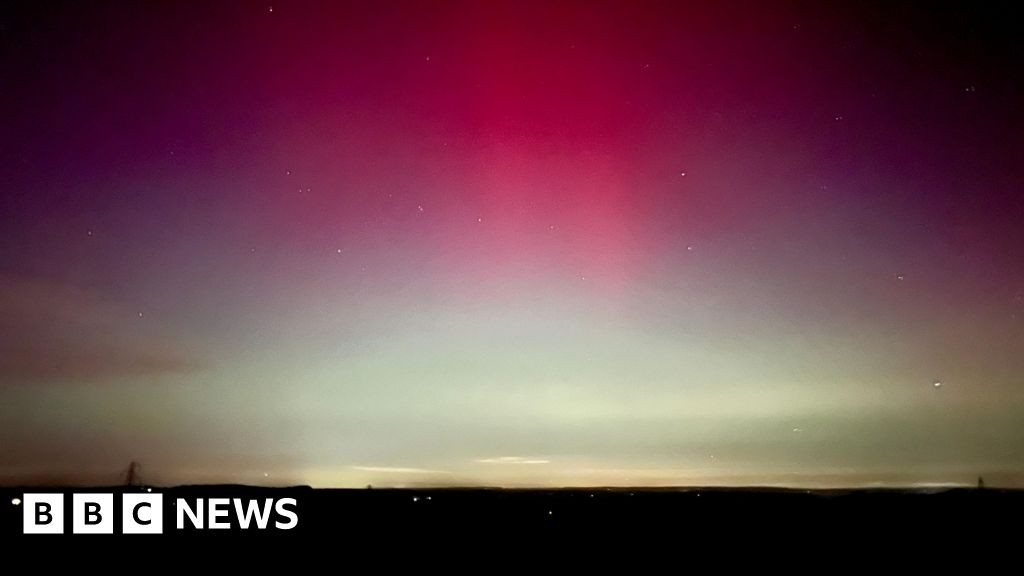
– Continuous Aurora Monitoring: SMILE will be the first mission capable of continuously recording the Northern Lights (aurora borealis) for up to 45 hours at a time, offering unprecedented insight into the mechanics behind these light displays.
A Global Scientific Collaboration
The SMILE mission is a massive international undertaking, reflecting the complex, collaborative nature of modern space science. The project brings together expertise from:
– The Mullard Space Science Laboratory (University College London)
– The University of Leicester
– The European Space Agency (ESA)
– **The Chinese Academy of