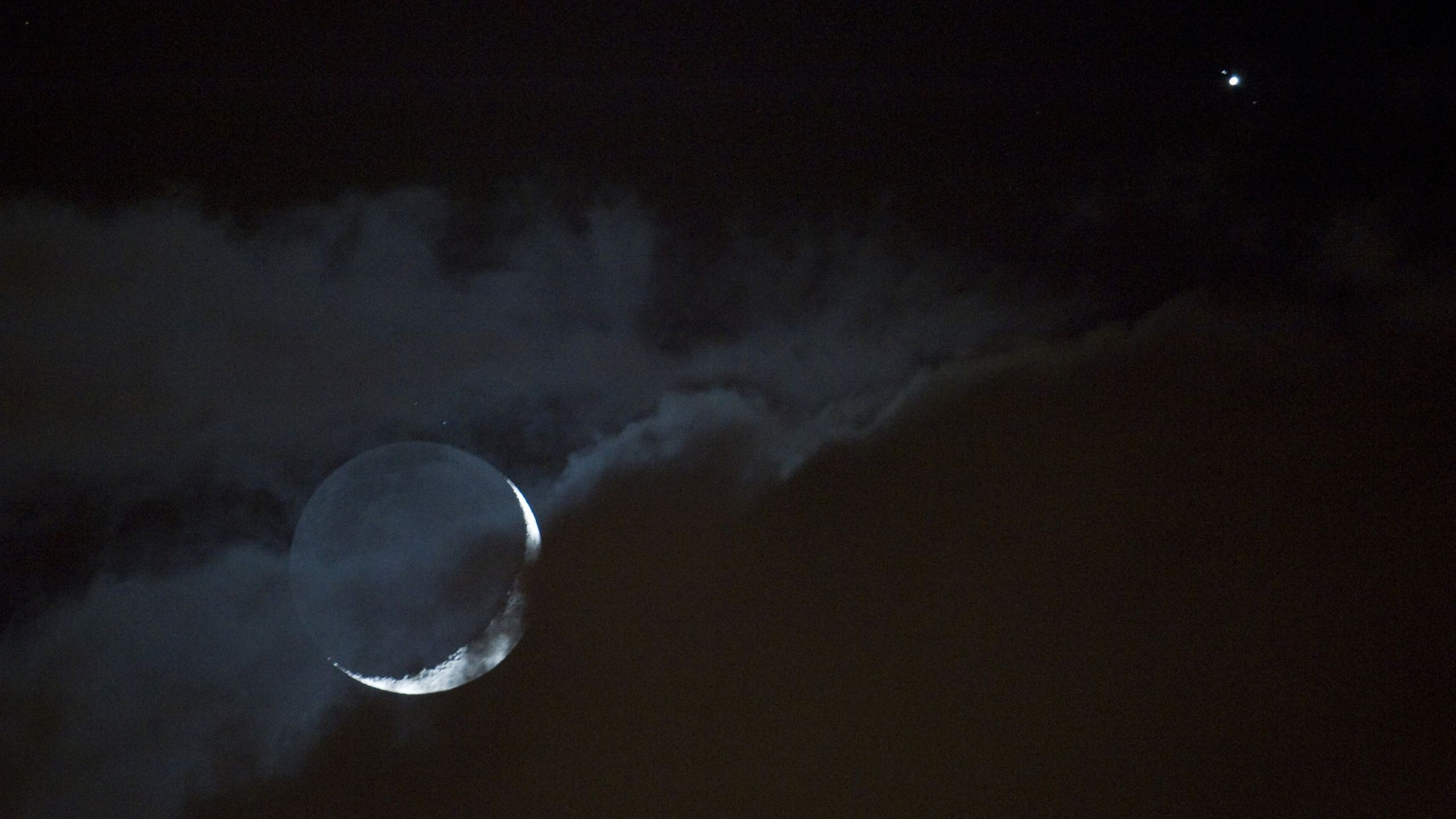
Look west on May 20. Right after sunset. There’s a show happening.
The waxing crescent moon lines up with bright Jupiter. They stick around for a few hours, slowly sinking below the spring horizon. Don’t look too far east, they’re hanging low.
The moon appears to align with Castor and Pollux.
That’s in Gemini. Jupiter shines just under 10 degrees lower and to the right. About the width of a clenched fist at arm’s length. Rough guess? Fine.
Venus is there too. It hugs the horizon to Jupiter’s right. We call it the “evening star.” It’s been hanging around. It’ll stick around. If you have a 4-inch scope or better, point it there. Watch the phases change on that pale, boring-looking disk. Just make sure the sun is actually gone first.
Why risk it? The sun isn’t playing nice with telescope lenses.
Grab a 6-inch scope if you have one. You’ll see Jupiter’s cloud bands. The Great Red Spot. Maybe its four biggest moons. Io. Europa. Ganymede. Callisto. They dance around the gas giant like tiny satellites.
Shift over to the moon. Look at the day-night divide. Those craters cast long, dramatic shadows. See Mare Crisium? Dark oval. South of that is Mare Fecunditatis. Old lava plains, billions of years dead. If you pay attention, the moon actually drifts away from Jupiter during the evening. Orbits are fast, really, if you know what you’re looking for.
Venus dips below the horizon first. About two and a half hours after sunset. Then Jupiter. The moon stays until near midnight for folks in the northeast U.S.
Times change by where you are. Always.
Check Time and Date’s tracker if you want the specifics for your spot. Precision helps, even when the view is just fine.
Want to dig into the lunar surface more?
- Check the picks for the best 2026 telescopes
- Read the guide on lunar observation
Or just look up. It’s free. And the moon doesn’t care if you bring gear or not.