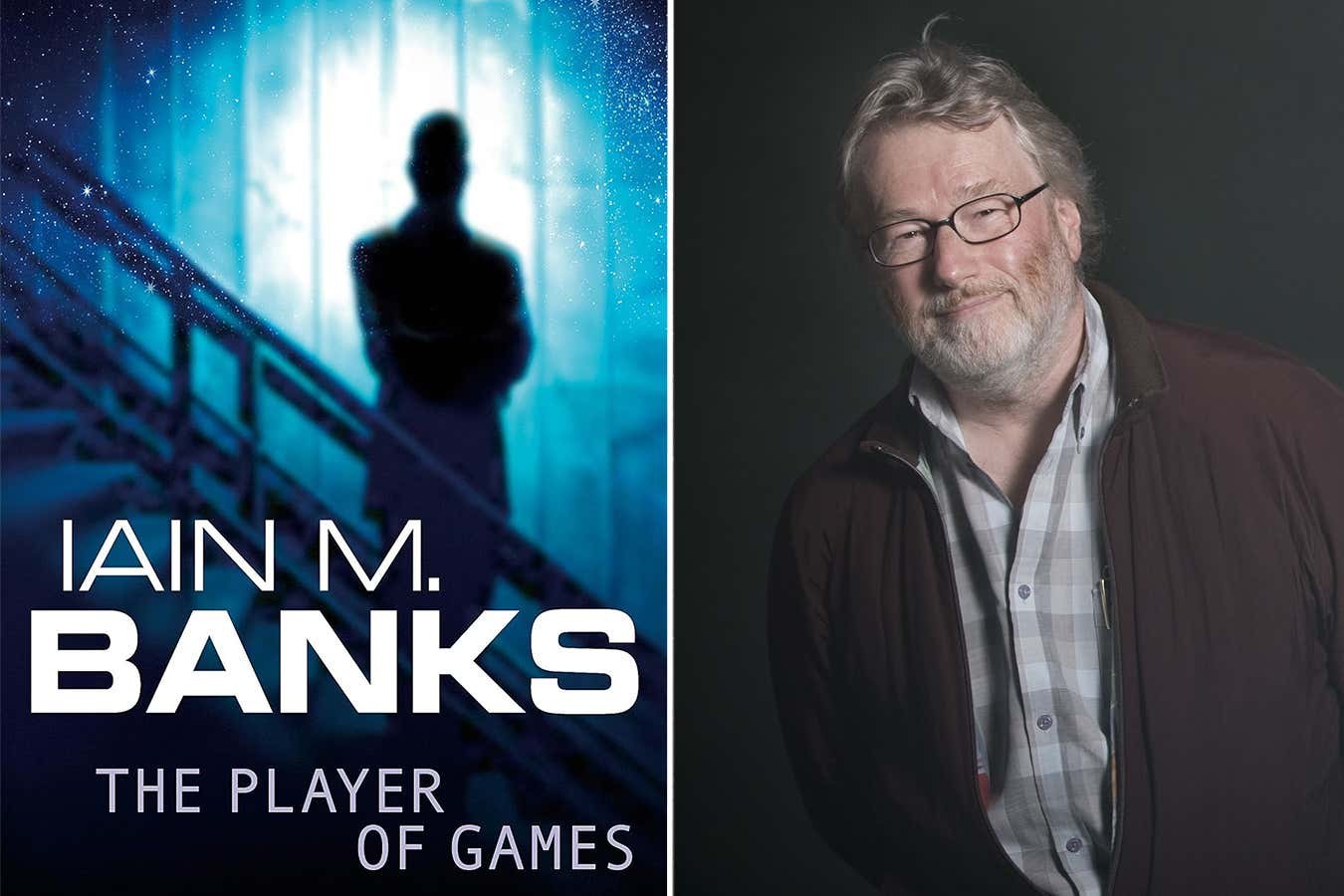
Iain M. Banks’ The Player of Games continues to resonate with readers decades after its release, sparking debate among the New Scientist Book Club members who recently revisited the novel. Set within the vast, post-scarcity civilization known as the Culture, the story follows Gurgeh, a master game player drawn into the brutal, high-stakes world of Azad, where winning a complex, empire-defining game means absolute power. The book isn’t just a sci-fi thriller; it’s a sharp examination of what happens when boredom and apathy creep into even the most perfect societies.
A Familiar Favorite, a Lasting Legacy
The novel’s enduring appeal is evident in the fact that over a third of Book Club members had already read it. Banks’ death in 2013 has only intensified his cult following, with many lamenting the loss of his unique voice. As one member poignantly wrote, “I still miss Iain. I’ve never read his last book… I guess it’s about time now, I’m getting to the age where I might never read it!” This sentiment underscores the deep connection readers feel with Banks’ work, a connection that transcends mere enjoyment.
Effortless Brilliance and Underlying Depth
Banks’ writing style is described as deceptively simple, masking layers of complexity. The novel’s brilliance lies in its ability to explore profound themes—the nature of utopia, the meaning of human existence in a universe managed by vast artificial intelligences—without sacrificing pacing or entertainment value. The inclusion of whimsical details, such as the “proto-sentient Styglian enumerator” that compulsively counts everything it sees, injects humor while subtly reinforcing the Culture’s alien yet advanced nature.
The Allure of Azad: Games as Political Mirrors
The novel’s core revolves around Azad, a game so deeply ingrained in its society that its winner becomes emperor. This setup invites critical analysis. As one member noted, “The game [Azad] was a representation, an encapsulation if you will, of the empire… probably a critique of Cold War politics.” The game isn’t just a plot device; it’s a microcosm of power dynamics, manipulation, and the human drive for control.
Gurgeh: A Flawed Protagonist in a Perfect World
Gurgeh himself is a divisive figure. Some see him as a disaffected, arrogant cheat, while others sympathize with his response to temptation. One member argued that Gurgeh’s decision to cheat wasn’t purely his own, but the result of subtle manipulation. This debate highlights the novel’s central tension: even in a utopia, free will can be compromised, and individuals can still succumb to their flaws.
The Culture: A Utopian Paradox
Banks doesn’t shy away from the inherent contradictions of utopia. The Culture’s post-scarcity existence, where almost anything is possible, leads to a strange form of ennui. As one member pointed out, Gurgeh’s boredom is a direct consequence of this lack of challenge. This critique aligns with broader philosophical questions about the necessity of struggle for human fulfillment. The Culture’s method of subtle interference in other civilizations, while seemingly benevolent, raises ethical concerns about autonomy and control.
The Next Read: Darker Horizons
The Book Club will move on to Annie Bot by Sierra Greer in January 2026, a novel that dives into darker territory. This shift underscores the ongoing exploration of complex themes and challenging narratives.
The Player of Games remains a relevant and thought-provoking work because it doesn’t offer easy answers. It forces readers to confront uncomfortable questions about power, freedom, and the very nature of paradise. The novel’s legacy lies not just in its imaginative world-building but in its enduring ability to spark critical reflection long after the final page is turned.