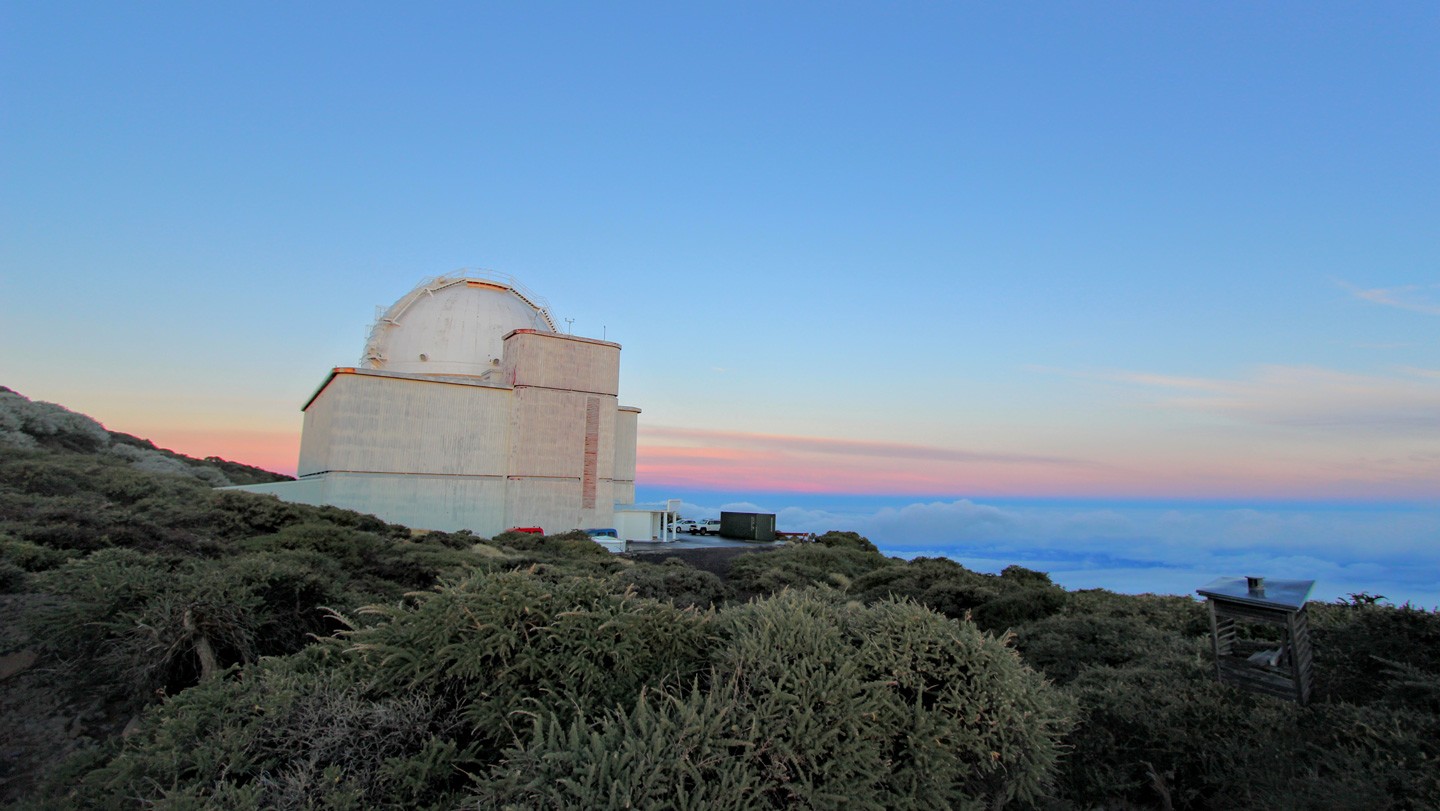
For three decades, astronomers have cataloged over 6,000 planets beyond our solar system, yet none have matched Earth’s characteristics. Now, a dedicated new project is launching in the Canary Islands this December with a singular goal: to locate an Earth analog. The “Terra Hunting Experiment” will be the first systematic search focused on Earth-like planets orbiting sun-like stars, equipped with the resolution and observational commitment needed to succeed.
Why This Matters: The Search for Habitable Worlds
The scarcity of Earth-like exoplanets isn’t merely an academic frustration; it fundamentally shapes our understanding of planetary formation and the potential for life beyond Earth. Most exoplanets discovered so far are either gas giants or rocky “sub-Neptunes” orbiting small, dim stars – environments drastically different from our own. Finding a true Earth twin would not only validate theoretical models but also provide crucial targets for future missions searching for biosignatures, the telltale signs of life.
The Challenges of Detecting Earth-Like Planets
Detecting Earth-like planets is exceptionally difficult due to their faintness and long orbital periods. Current methods rely on indirect measurements, such as tracking a star’s wobble caused by an orbiting planet’s gravitational pull. This wobble is minuscule for Earth-sized planets and takes years to confirm, as the signal gets drowned out by stellar noise. It’s akin to spotting a firefly near a bonfire.
Most confirmed exoplanets are larger than Earth and orbit much closer to their stars, making their wobble easier to detect. This bias leaves the critical question unanswered: are Earth-like systems rare or simply beyond our current detection capabilities?
HARPS3: A New Tool for the Hunt
The Terra Hunting Experiment will employ HARPS3, a state-of-the-art spectrograph designed to measure stellar motion with unprecedented accuracy. Refurbishing an existing telescope from the 1960s proved more cost-effective than building a new one, maintaining precision while reducing expenses. The instrument can detect stellar movement as slow as 10 centimeters per second – roughly the speed of a crawling baby – by analyzing subtle shifts in starlight wavelengths.
To overcome stellar noise, the project will observe up to 50 sun-like stars every night for a full decade, using fully automated observations to maximize efficiency. The team selected stars based on parameters most similar to our sun, prioritizing data quality.
Why Look for Earth-Like Planets? The Hunt for Life
The absence of Earth-like systems complicates the search for extraterrestrial life. Many known exoplanetary systems are hostile: M dwarf stars emit violent radiation, and tidally locked planets experience extreme temperature differences. Searching for life on unfamiliar worlds is far more difficult than seeking it on a planet similar to our own.
That’s why scientists believe our best chance of finding alien life lies on an Earth-sized planet in the habitable zone of a sun-like star. Such a discovery would unlock new possibilities for atmospheric studies and biosignature detection.
A Global Effort: Collaboration and Future Missions
The Terra Hunting Experiment is part of a broader international effort. NASA’s Kepler mission identified roughly 2,600 exoplanets, and researchers expect to find at least two Earth-like candidates in the habitable zone. These candidates will then become primary targets for future missions, such as the proposed NASA Habitable Exoplanet Observatory or the European Large Interferometer for Exoplanets.
A Danish team is also planning a similar five-year search in Chile, complementing the Canary Islands project by surveying the southern sky. If Terra Hunting fails to find an Earth analog after ten years, it would suggest our planet might be more unique than previously thought.
Ultimately, the quest for an Earth twin requires a collaborative, global effort. Whether successful or not, the search will yield valuable insights into planetary systems and our place in the universe.