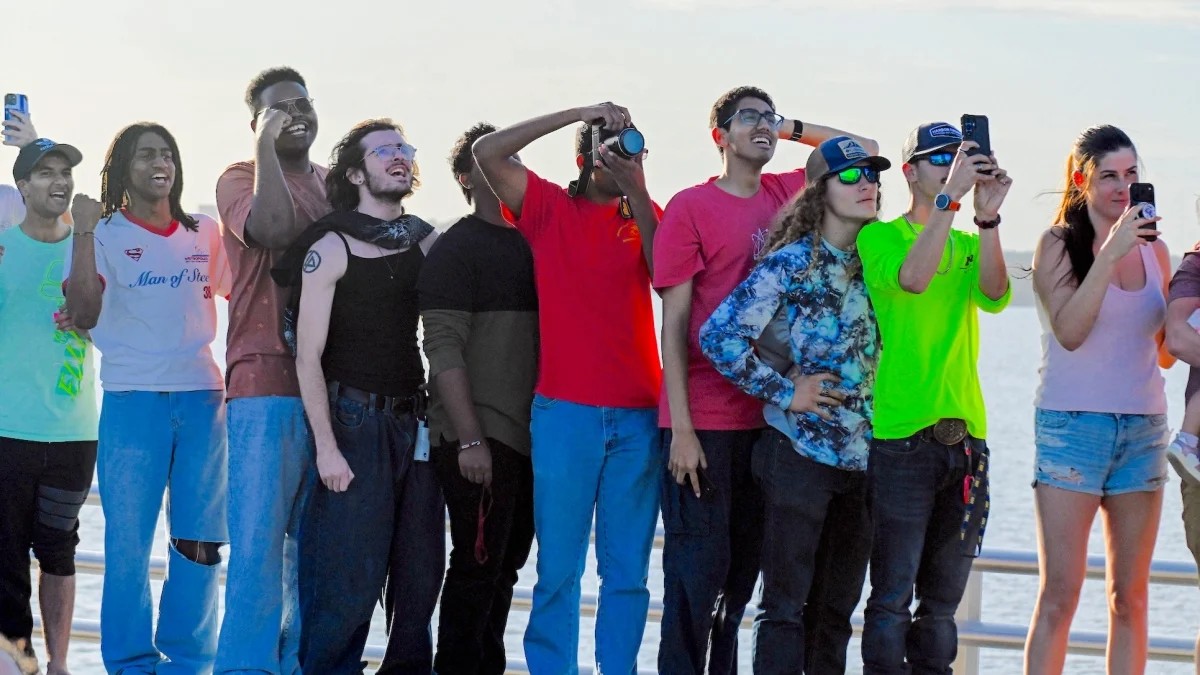
The Artemis II launch wasn’t just another space mission; it was a rare occasion where social media collectively celebrated a monumental scientific achievement. For a brief, almost unbelievable moment, the usual cynicism and negativity that dominate online platforms were replaced by genuine awe and admiration.
The sheer scale of the endeavor—launching human beings toward the moon atop a massive rocket—resonated in a way few modern events have. Unlike the routine success of SpaceX landings, this mission represented something unprecedented for most living people. The last crewed moon launch occurred over half a century ago, making this event a unique spectacle for a generation accustomed to digital distractions.
The mission’s impact extended beyond its technical complexity. In a world saturated with war, economic instability, and environmental crises, Artemis II offered a glimpse of something positive. Even critics of the program’s cost acknowledged the mission’s symbolic value, as a reminder that humanity can still unite around ambitious, world-changing goals.
The launch also benefited from modern camera technology, which captured the event in stunning detail. This real-time visual spectacle, shared across social media, amplified the sense of wonder. The collective response suggested that even in an era of constant negativity, the human spirit can still be moved by extraordinary accomplishments.
The Artemis II launch was a reminder that even in the age of doomscrolling, humanity can still look up at the stars and feel a sense of collective hope.
The mission’s success isn’t just about technological prowess; it’s about reaffirming that progress and aspiration can still transcend the noise of modern life.