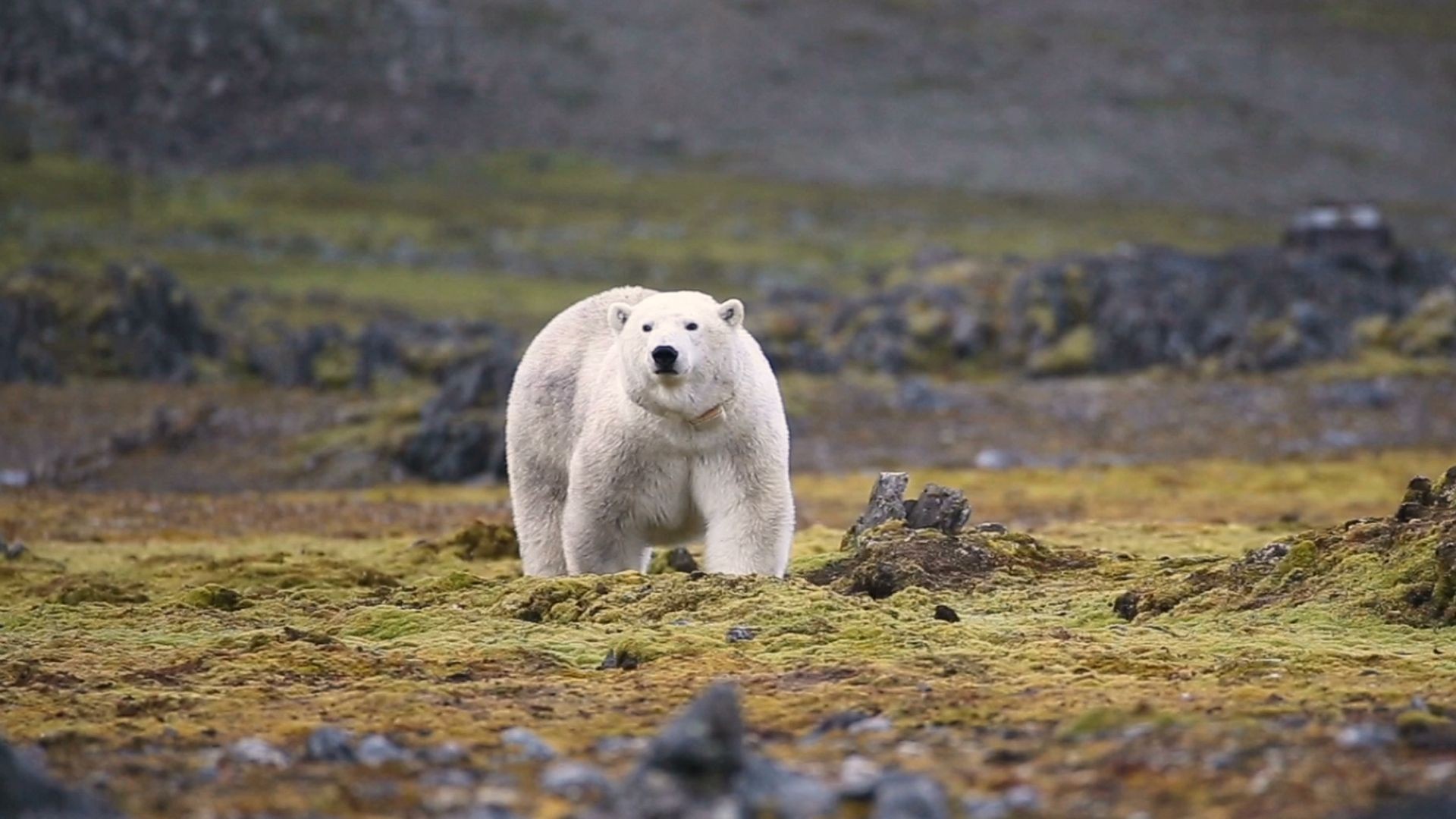
Recent scientific findings have introduced a surprising twist to the narrative of the polar bear. Long considered the “poster animal” for climate change—a species doomed by the rapid melting of Arctic sea ice—some populations are showing unexpected signs of resilience. From dietary shifts in Svalbard to potential genetic mutations in Greenland, the data suggests that while the species is under immense pressure, the path to extinction may not be as uniform as previously thought.
Unexpected Resilience in Svalbard
In the Norwegian archipelago of Svalbard, researchers have observed a phenomenon that defies standard climate models. Despite a rapid loss of sea ice in the region, a study tracking 770 adult bears between 1995 and 2019 revealed that their body condition actually improved after the year 2000.
This “fattening up” of the population is driven by a shift in diet and a highly productive local ecosystem. As sea ice diminishes, bears are turning to alternative food sources to compensate for the lack of traditional prey:
– Bird eggs: Bears have been observed raiding massive colonies of ground-nesting birds, consuming hundreds of eggs in a single day.
– Marine mammals: They are increasingly targeting walruses.
– Terrestrial prey: There have even been sightings of bears hunting reindeer.
Why this matters: This dietary flexibility shows the remarkable resourcefulness of the species. However, experts warn against viewing this as a permanent solution. Reindeer populations cannot support large numbers of bears, and while these “opportunistic” meals help individual bears survive, they do not replace the high-fat seal diet essential for long-term Arctic survival.
The Genetic Question: Adaptation or Stress?
Perhaps even more provocative is recent research from Greenland, which suggests polar bears may be undergoing rapid genetic changes. Scientists have identified increased activity in “jumping genes”—elements that can move within the genome and cause mutations—specifically in southern Greenland populations living in warmer climates.
These genetic shifts appear to affect metabolic pathways, potentially helping bears process fats differently or manage heat more effectively. This raises a critical scientific debate:
1. Is it adaptation? Are the bears evolving to thrive in a warmer, different environment?
2. Is it stress? Is the increased genetic mutation actually a sign of biological damage caused by the extreme stress of a changing environment?
Regardless of the cause, the timeline is a major concern. While the bears are reacting biologically, the pace of climate change is accelerating. With the Arctic potentially ice-free in summers by 2050, genetic evolution—which typically takes hundreds or thousands of years—may simply be too slow to keep pace with the melting ice.
A Fragmented Future: 20 Populations, 20 Scenarios
It is a mistake to view the polar bear as a single, monolithic group. Biologists emphasize that there are roughly 20 unique sub-populations, each facing a different reality based on their local geography.
- The “Losers”: Regions like Western Hudson Bay, which lack rich alternative ecosystems and have thin ice, are expected to see populations plummet quickly.
- The “Refuges”: Areas like Svalbard or the Canadian Arctic Archipelago may act as temporary strongholds. In these places, nutrient-rich waters and thicker ice may provide enough food and habitat to sustain bears longer than expected.
“We suspect that it’s going to be 20 different scenarios, all kind of following the same trajectory but at different scales,” notes biologist Andrew Derocher.
The Bottom Line
The ability of polar bears to scavenge for eggs or undergo genetic shifts offers a glimmer of hope, but it is not a “get out of extinction free” card. These adaptations may buy the species precious time, but they cannot replace the sea ice that defines their existence.
The ultimate survival of the polar bear depends less on their ability to hunt reindeer and more on global efforts to limit warming. If global temperature rises can be capped at 2°C, the species may yet find a way to persist into the next century.
Conclusion: While polar bears are demonstrating remarkable behavioral and genetic flexibility, these adaptations are likely “stop-gap” measures rather than permanent solutions to a warming world. Their long-term survival remains inextricably linked to global efforts to reduce greenhouse gas emissions and stabilize Arctic sea ice.