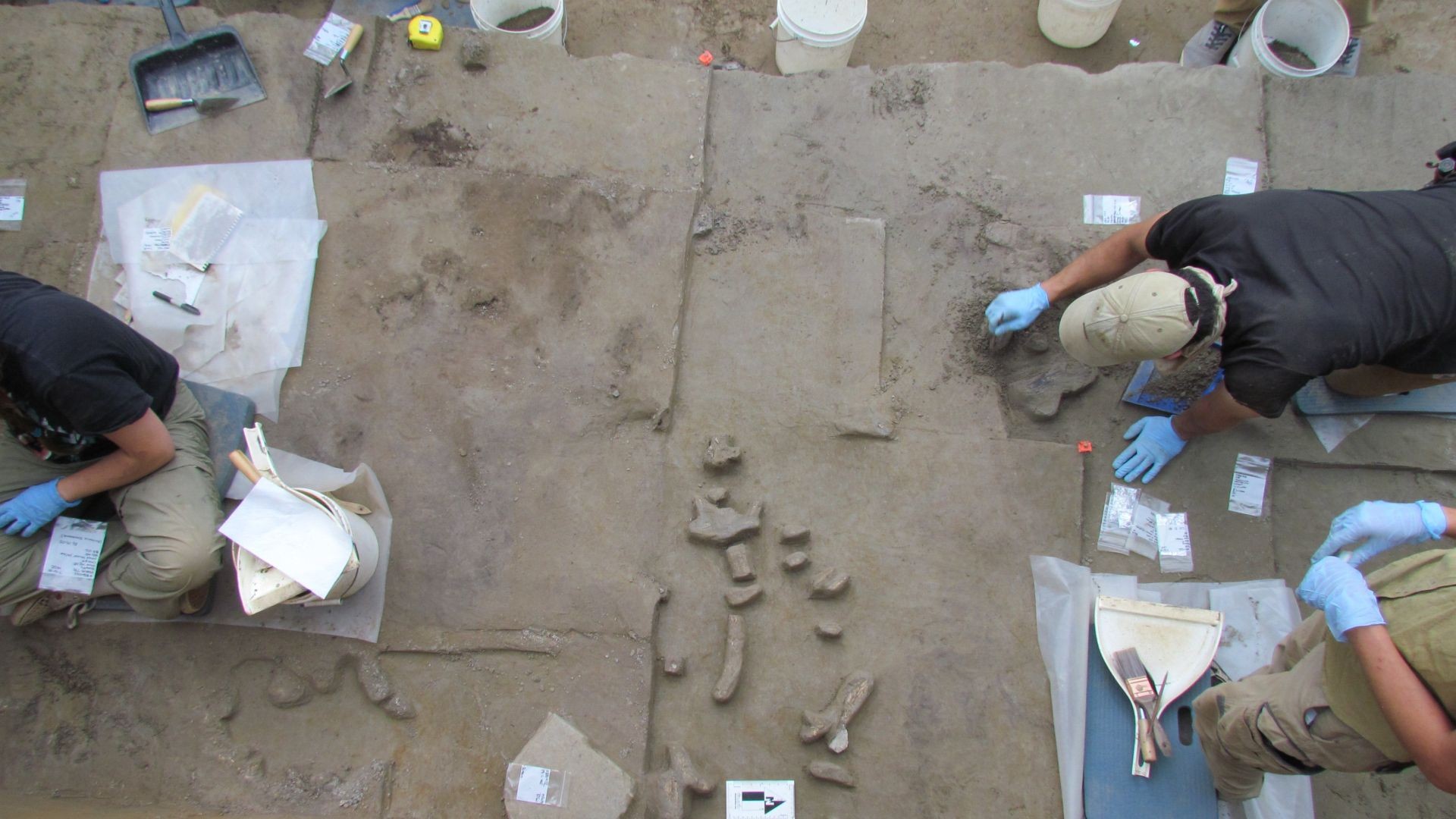
New archaeological discoveries in Alaska are reshaping our understanding of how the first Americans arrived in the New World. Artifacts unearthed in the Tanana Valley, dating back 14,000 years, suggest that the ancestors of the Clovis people – previously thought to have migrated along coastal routes – likely traveled through an inland ice-free corridor from Asia.
The Long-Standing Mystery of First Americans
For decades, the Clovis culture, identified by distinctive stone tools found across North America, was considered the earliest widespread archaeological presence. However, more recent findings have demonstrated that people inhabited the Americas before the Clovis, prompting debate about migration routes. The main question has always been: did the first Americans arrive by sea, hugging the Pacific coastline, or by land, traversing the Bering Land Bridge and moving south through an ice-free corridor?
Alaskan Site Reveals Early Tool Production
Excavations at the Holzman site in central Alaska have uncovered remarkably well-preserved evidence of early human activity. Researchers found remnants of stone and mammoth ivory tool manufacturing dating to around 14,000 years ago, including a near-complete mammoth tusk used for ivory production and hammerstones for crafting stone tools. The site’s unique preservation conditions have even yielded ancient plant DNA and bison hair, providing an unprecedented glimpse into the lives of these early inhabitants.
Why This Matters: Challenging Coastal Migration Theory
The significance of the Alaskan findings lies in their location between the Bering Land Bridge and the theoretical ice-free corridor. The tools and techniques used at Holzman closely resemble those associated with the Clovis culture found further south. This evidence strengthens the argument that people moved inland from Asia, not just along the coast.
“People lived and thrived in interior Alaska around 1,000 years before the appearance of Clovis technology further south,” said archaeologist Brian Wygal.
This inland route makes logical sense given the timeline of the last ice age and the potential for ice-free passages through Canada. The Alaskan site serves as a crucial link in understanding how humans spread throughout North America.
Caveats and Future Research
While compelling, the Alaskan evidence isn’t conclusive. Some researchers caution that similarities in tool-making and cultural practices between early Asian and American populations could complicate the direct link to the Clovis. It is possible that both inland and coastal migration waves contributed to the peopling of the Americas.
Future research will focus on further excavations in the Tanana Valley and more intensive study of the ice-free corridor itself, which remains relatively unexplored. Genetic analysis of ancient human remains could also provide additional insights into migration patterns.
The latest Alaskan discoveries underscore the complexity of early American settlement. The debate over migration routes is far from settled, but the growing evidence suggests that the first Americans likely utilized a combination of inland and coastal pathways to reach and populate the New World.