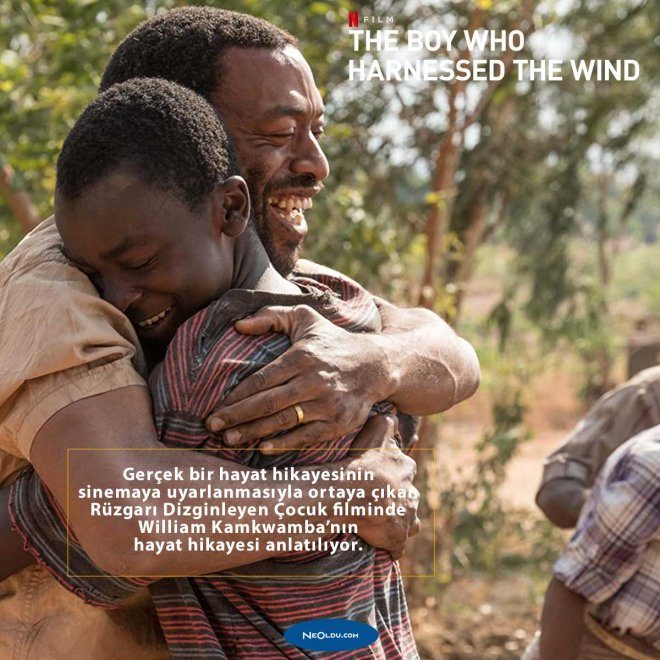
It’s rare for a biopic to feel this grounded, even when the plot involves building a windmill out of scrap metal. Netflix’s The Boy Who Harnessed the Wind isn’t just another streaming entry. It’s a tense, quiet triumph based on a true story that grabbed critics and audiences alike. The film adapts William Kamkwamba’s memoir, placing him center stage as he navigates famine and poverty in Malawi. If you’re wondering why this movie has earned its spot among the best on the platform, the answer lies in its restraint. It doesn’t scream for attention. It simply shows you a boy solving impossible problems with nothing but curiosity and junkyard parts.
Breaking Down the Film’s Real-World Impact
The narrative follows William Kamkwamba, played in dual roles by Maxwell Simba (young William) and William Kamkwamba himself as an adult narrator. The core conflict isn’t just survival; it’s intellectual survival. When a famine hits his village, young William is forced to drop out of school. Most people in that position might have accepted their fate. William didn’t. He spent his days in the local library, reading books he didn’t fully understand, piecing together concepts like electricity and aerodynamics from illustrations and fragmented text.
This isn’t a movie about genius in the traditional sense. It’s about access. The tragedy isn’t that he lacked intelligence; it’s that his family couldn’t afford the fees to keep him in the classroom. The film highlights how education is often a privilege, not a right, in parts of the world. William’s determination to learn despite being excluded is what drives the plot forward.
The Cast and Character Dynamics
Chiwetel Ejiofor steps into the role of Trywell Kamkwamba, William’s father. Ejiofor brings a heavy, weary gravity to the character. Trywell isn’t a villain, but he isn’t a saint either. He’s a man crushed by circumstance, forced to make heartbreaking decisions about his son’s future. His performance anchors the film, providing the emotional weight against which William’s optimism pushes.
Maxwell Simba, as the young William, is electric. He captures that specific, desperate kind of hope a child has when they believe they can fix everything. His chemistry with Ejiofor is complex, filled with love, frustration, and the painful gap between a father’s limitations and a son’s vision.
“The film doesn’t rely on spectacle. It relies on the quiet power of a mind refusing to quit.”
Why Viewers Are Talking About It
Audiences are drawn to the film because it avoids the typical Hollywood hero arc. There are no sudden wealthy benefactors. No last-minute magical solutions. William builds his windmill through trial, error, and community skepticism. The tension comes from whether his invention will actually work, and whether the village will accept it. It’s a slow burn. A realistic burn.
The movie also tackles the theme of tradition versus innovation. William’s community views his experiments with suspicion. They see a boy playing with trash. He sees a solution to their starvation. This cultural clash adds a layer of realism that many biopics miss. It’s not just about one boy against the world. It’s about a boy against the established norms of his society.
You’ve probably heard the name before, but William Kamkwamba’s journey is one for the books. He didn’t just survive; He turned tragedy into triumph, and he shares it all. From the script together with the talented Chitewel Ejiofor, Kamkwamba brings his experiences to the page. It’s not just a script. It is a mirror held up to resilience.
The architect of hope
The man himself is the real story here. A tragic past for sure. But success? That’s the headline. Kamkwamba offers us a glimpse into a life that defied all odds. He is not just a character in the film; He is the architect of his own story, working with director Chitewel Ejiofor to get the details right.
Why this is important now
At a time when we are constantly scrolling past sophisticated narratives, there is something raw about Kamkwamba’s account. He’s not letting Hollywood sanitize the struggle. Working with Ejiofor ensures that the spirit of the story is preserved. It’s about the grit. It’s about ingenuity. It’s building something from scratch.
“The film is an expression of the human spirit”, Kamkwamba suggests through his writing. “It’s about finding light in the dark.”
This isn’t just another biopic. It is a direct line to the young man’s vision. And when you watch it, you’ll see why his story has captured hearts around the world. It’s not just about windmills or energy. It’s about opportunity.
What happens when you give a child a chance? You get a revolution. Kamkwamba is living proof. And now, thanks to this project, we get to witness it. The screen will flicker. The story unfolds. And you’ll wonder why you didn’t know this sooner.
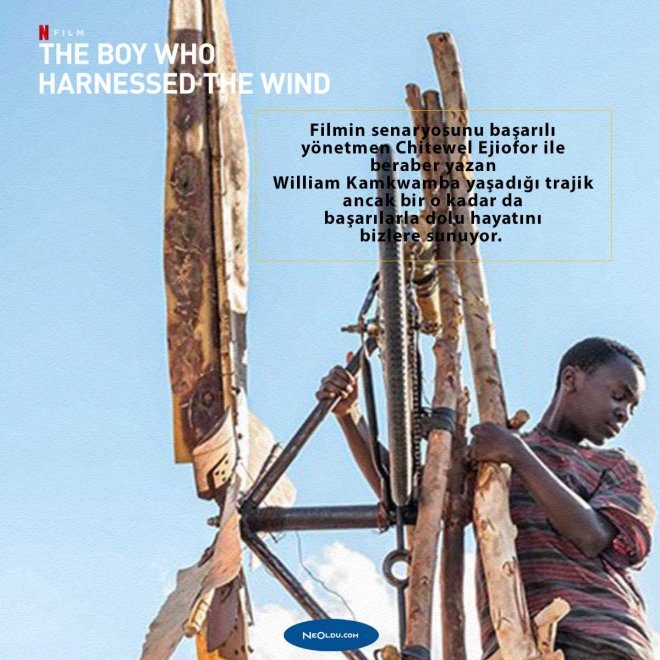
How a Kenyan Teen Beat Drought with a Windmill
The narrative doesn’t shy away from the harsh reality of Malawi’s famine. It’s not just background noise. It’s the antagonist. A group of tribes is starving. The land is cracked. The drought is relentless. Then comes the rescue. But it doesn’t come from an international aid organization or a government handout. It comes from a teenager with a broken bicycle and a library book.
This is the real-life story of William Kamkwamba.
In the film adaptation of his memoir, The Boy Who Harnessed the Wind, we see the desperation firsthand. William grows up in Wimbe, a small village in Malawi. When his family loses their farm to drought, they are forced to flee to a refugee camp. Hunger becomes a constant companion. The local wells run dry. Crops fail. The threat of starvation looms over every meal.
Most people would accept defeat. William doesn’t.
He spends his days scavenging for scrap metal. He visits the local library when it’s open, reading physics textbooks that his school couldn’t afford. He teaches himself about wind power. About aerodynamics. About how to turn kinetic energy into electricity. The library becomes his sanctuary. The scrapyard becomes his workshop.
“I was not going to die from hunger.” — William Kamkwamba
His invention is humble. A windmill made from a tractor fan, a motorcycle dynamo, and wooden planks. It looks makeshift. It functions perfectly. The windmill pumps water from the ground. The water saves the crops. The crops save the village.
The movie captures the ingenuity required to solve such a complex problem with so few resources. It’s not just about engineering. It’s about survival. It’s about the refusal to let circumstance dictate your future. William’s story is a testament to the power of education. And the sheer stubbornness of hope.
Malawi remains one of the poorest countries in the world. Droughts are still a recurring threat. But William’s windmill sparked a change. It drew attention to his village. It inspired others to look at the problem differently. To see potential where others saw only ruin.
The film ends with William on stage at TED. He speaks about curiosity. About the importance of asking questions. About how a book can change your life. But the real power of his story isn’t in the speech. It’s in the work. The wind is still blowing over Wimbe. The water is still pumping. The crops are still growing.
Sometimes the solution is simpler than you think. You just have to know where to look.
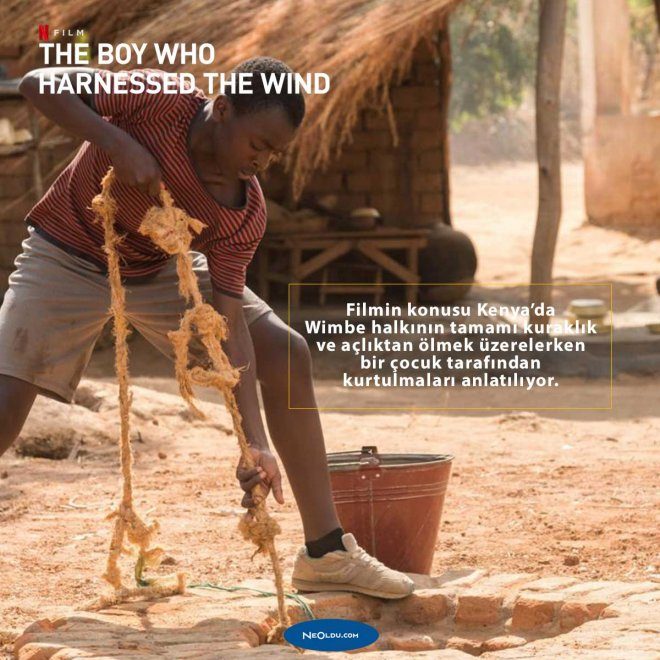
It was already hot in the village. Dry. Then came the tobacco company.
They didn’t just plant crops. They clear-cut everything.
William Kamkwamba was a child. Maybe twelve. Maybe thirteen. He watched the trees fall. The forest, which was once a shield against the sun, disappeared.
It wasn’t just about the scenery. In Kenya, trees store water. They cool the earth. Without them? The ground bakes.
Farmers had a big problem. Harvest failed. The drought hit harder and faster. A small amount of deforestation was enough to topple the scale.
“The loss of trees meant the loss of rain.”
William saw it. He knew it had to change.
When the rain stops, people leave
The drought has not only dried up the soil in Malawi. It also drained the family’s bank account.
Harvest failed. The water ran out. William Kamkwamba’s family saw their livelihood drying up next to the maize fields.
It wasn’t just hunger. It was about survival.
The neighbors started packing their bags. Leaving the village was the only logical step. Chaos spread throughout the community as people looked elsewhere to find rain or at least hope.
In the midst of this exodus, William’s sister did something radical.
She ran away.
Not just to another village. She left with one of his teachers. A desperate attempt for a better life, or perhaps just an escape from the collapsing world around them.
The village emptied. One by one, people disappeared over the horizon.
William stayed.
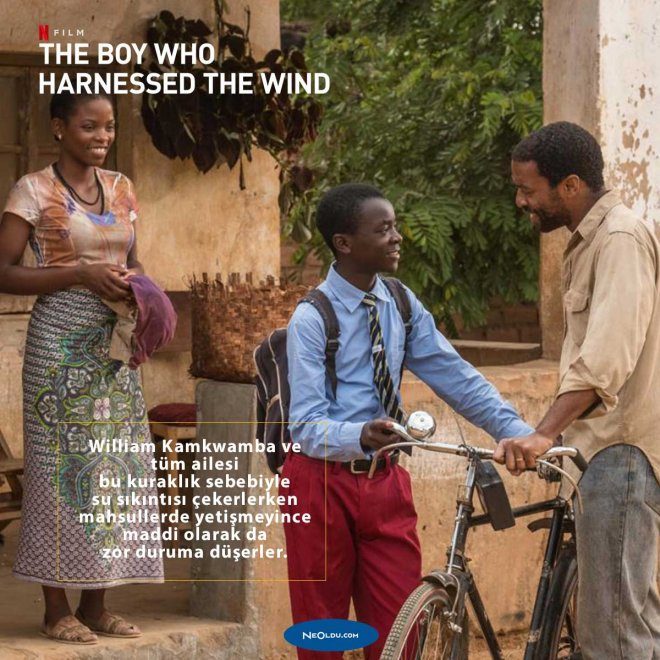
How one boy’s obsession with physics broke the cycle of poverty
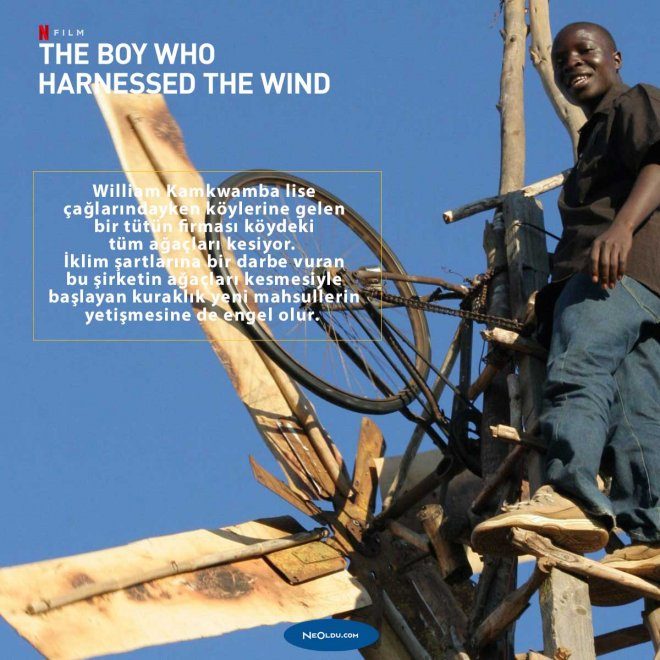
In the midst of crushing deprivation, William Kamkwamba didn’t just survive—he studied. As hunger gnawed at the edges of his village, he kept his eyes on the pages of borrowed physics textbooks. He did not have access to formal education for a long time, but he had access to knowledge. He read until his fingers traced the diagrams of wind and energy. He taught himself how the machines worked, one broken part at a time.
The result was not theoretical. It was a rickety, hand-crafted wind turbine built from scrap wood, bicycle parts and old car alternators. It looked fragile. It worked perfectly. With this homemade device, William achieved what experts say was impossible for a child from a remote Malawian village: he generated electricity.
Suddenly the darkness lifted. For the first time in years, his village saw the light. But the turbine didn’t stop there. Using the same principles of motion and energy, he built a pump. The water returned to the fields. Crops grew again. The cycle of hunger was broken.
“I had no money, but I had ideas.”
It wasn’t magic. It was physics applied with desperate ingenuity.
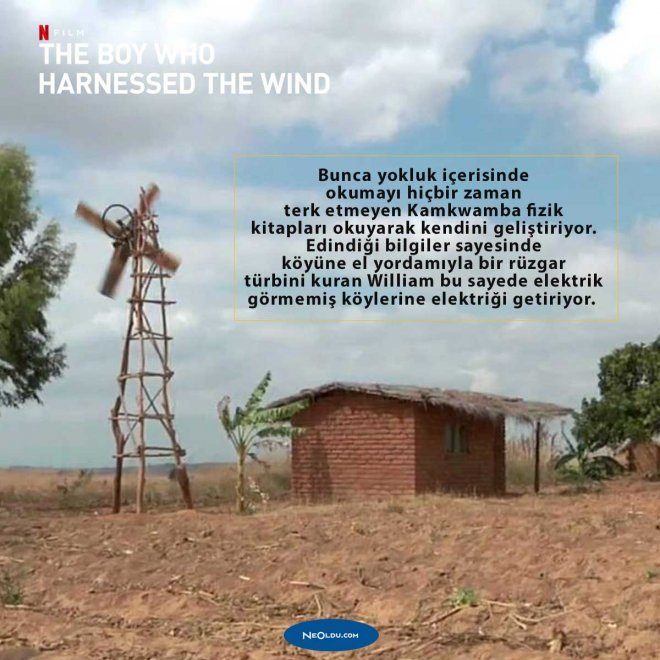
Why The Boy Who Harnessed the Wind is a must-see on Netflix
If you’re looking for a movie that really adds to your screen time in a meaningful way, just look no further than Billy Watkin’s adaptation of William Kamkwamba’s memoir. It works on all levels.
The production value is undeniable. Every shot, every location and every detail is handled with care. You can feel the purpose of the frame. This is not just background noise. It’s a carefully considered choice that grounds the story in a very specific and harsh reality.
“This movie works on every level.”
This attention to detail is important. When you watch it, you just don’t see the plot unfold. You are looking at a carefully constructed world. The environment feels more like real life than a stage. That distinction changes how you receive the emotional beats.
It’s hard to find a film that balances high production quality with such a focused and tight story. The two work together here. Visuals serve the story, and stories need visuals. No fillers. There is no pointless movement. This is a clear and powerful expression of a true story that deserves to be told in this way.
And honestly? This kind of craft is refreshing. It doesn’t try to dazzle you with empty spectacle. It earns its moments.
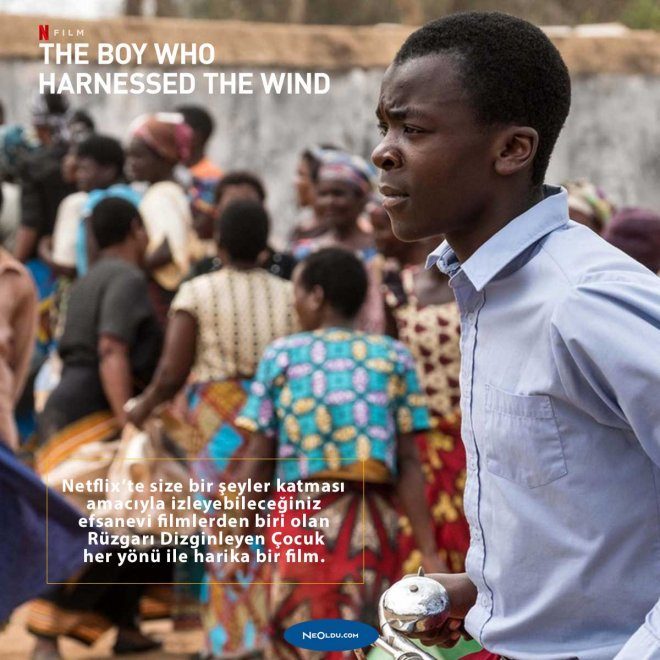
Maxwell Simba’s defining performance
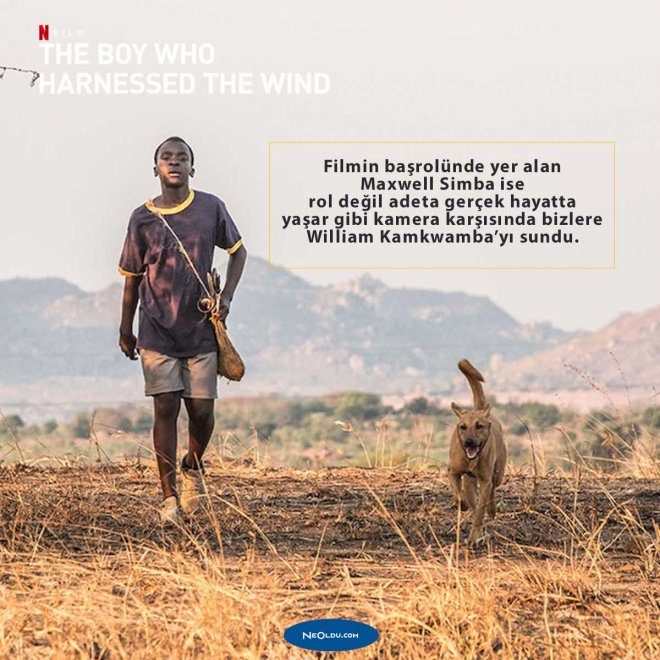
Maxwell Simba does more than play William Kamkwamba. He embodies Him. The difference is important. In The Boy Who Harnessed the Wind, the boundaries between performance and life become completely blurred. Simba delivers the role with a raw authenticity that feels more like watching a real person navigate survival than a performance.
The result is a production that falls squarely in the “high quality” category. IMDb users agree, giving the film a solid of 7.6. This score is more than just a number. It’s a testament to the film’s emotional weight and historical accuracy that it resonated with audiences far beyond biography enthusiasts.
The Wind Does Not Blow for Free: Viewer Reactions to The Boy Who Harnessed the Wind
The Netflix adaptation of William Kamkwamba’s story isn’t just a biopic. It’s a masterclass in resilience. Viewers aren’t just watching a film; they are witnessing a raw, unfiltered look at ingenuity against impossible odds.
The consensus is clear. People are moved.
One viewer noted the specific power of knowing this is an adaptation of an autobiographical book. It changes the weight of the screen. William doesn’t just survive the malnutrition and poverty of Malawi; he lets curiosity drive him forward. He refuses to quit. That refusal creates a ripple effect in his community that the movie captures beautifully.
“It’s a wonderful film. My heart softened. I was truly moved by the intelligence that creates opportunities out of impossibilities.”
Another viewer put it bluntly. Hunger, famine, ignorance, corruption. These are the barriers. William breaks them. He doesn’t just find ways; he makes them. The experience is visceral. Tears are common. One person admitted they hadn’t cried at a movie in years until this one.
The realism hits hard.
For those stuck at home looking for something substantial, this delivers. The acting holds up. The storytelling is tight. But more than that, it transports you. You feel the dry heat of the Malawian drought. You feel the desperation.
Behind the Performance: Chiwetel Ejiofor as Trywell Kamkwamba
The emotional anchor of the story isn’t just William. It’s his father. And no one could play Trywell Kamkwamba better than Chiwetel Ejiofor.
Trywell is not a villain. He is a man crushed by circumstance. He loves his son, but he is also a product of a system that offers no safety net. Ejiofor brings a quiet, devastating dignity to the role. You see the conflict in his eyes constantly—the desire to protect his son’s dreams versus the brutal reality that dreams don’t fill empty bellies.
The scene where Trywell asks the family which meal they can afford to skip is often cited as the breaking point for viewers. It’s not melodramatic. It’s quiet. It’s real. It captures the specific, soul-crushing anxiety of a parent who cannot provide. Ejiofor’s performance ensures you don’t just sympathize with the family; you understand the political and economic forces trapping them.
“You forget everything else and witness a parent’s helplessness. It’s a masterful performance.”
The chemistry between Ejiofor and the young actor playing William is crucial. It grounds the fantastical elements of windmill construction in human emotion. Without Trywell’s struggle, William’s triumph feels unearned. With it, every gear turn feels like a victory.
Why This Story Resonates Now
In an era defined by consumer excess and digital noise, The Wind Does Not Blow for Free offers a stark counter-narrative. Viewers have pointed out that the film serves as a mirror. It highlights how much we take for granted while millions struggle for basic sustenance.
It’s not just about a windmill. It’s about agency.
William doesn’t wait for aid. He doesn’t wait for permission. He scavenges. He reads. He builds. He uses the scraps left behind by the outside world—discarded bicycle parts, scrap metal—to create something that saves his village.
For many, this is the core message. Intelligence and resourcefulness are universal. Opportunity is not. The film leaves viewers questioning why so much potential is lost to poverty, while celebrating the specific triumph of one boy who refused to let his circumstances define his future.
The ending, which cuts to the real William and his family, adds a layer of authenticity that lingers. It’s not a Hollywood wrap-up. It’s a reminder that this actually happened. And it changes how you look at the world around you.
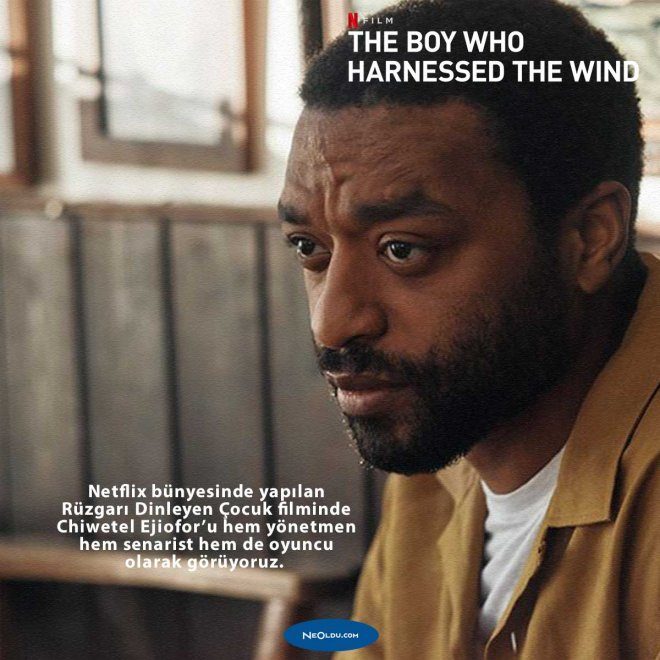
Chiwetel Ejiofor didn’t start with Twelve Years a Slave. That Oscar-nominated role came later. His actual cinematic debut was in Serenity. But his latest project under Netflix demands more from him. He isn’t just in front of the camera. He wrote the screenplay. He steered the director’s chair. He plays the lead.
The film is The Boy Who Hears the Wind. It tells the true story of William Kamkwamba. In this adaptation, Ejiofor voices Maxwell Simba. He is William’s father. A figure of authority. And fear.
The Father-Son Dynamic
The relationship between William and his father drives the narrative. Maxwell Simba represents the crushing weight of Malawi’s famine. When crops fail, desperation sets in. The family is displaced. They move to a camp. Life there is fragile.
William, a young boy with big ideas, faces resistance. His father sees science as a distraction. Or worse, a threat. To Maxwell, the immediate need for food outweighs abstract curiosity. He wants William to work. To survive. Not to dream.
“Science won’t fill the belly.”
This line, or the sentiment behind it, echoes through their interactions. Ejiofor portrays Maxwell not as a villain. But as a man broken by circumstance. He is trapped by poverty. And tradition. He cannot see a path out that doesn’t involve manual labor or migration. William’s inventions seem like nonsense to him. Until they aren’t.
The tension is palpable. It’s not just about a windmill. It’s about who gets to define reality in a starving village. Ejiofor brings a quiet intensity to the role. He makes you understand why a father would crush his son’s hopes. Survival is a brutal teacher. And in The Boy Who Hears the Wind, it teaches both men hard lessons.
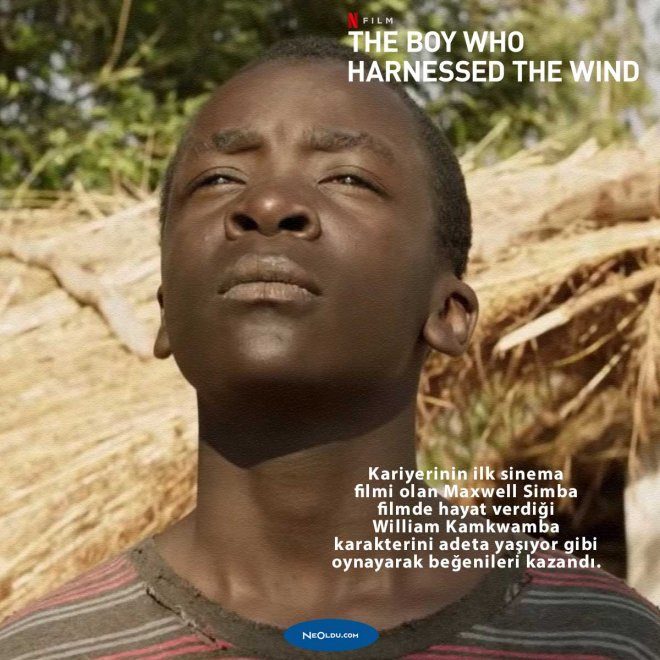
Windrider: Maxwell Simba’s breakout role
This role requires more than acting, it requires living another life.
Maxwell Simba does more than play William Kamkwamba in his film debut. He embodied him. result? Instant critical acclaim for a newcomer.
Young Maxwell made a name for himself in the industry with The Boy Who Harnessed the Wind. His performance has not been honed by years of experience. It’s raw. It was real.
“He plays William Kamkwamba like he’s alive.”
William’s story is the driving force behind this film. He fights for his family. He fights for his village. He changes their fate with nothing but a windmill and sheer will.
Maxwell captures that struggle perfectly.