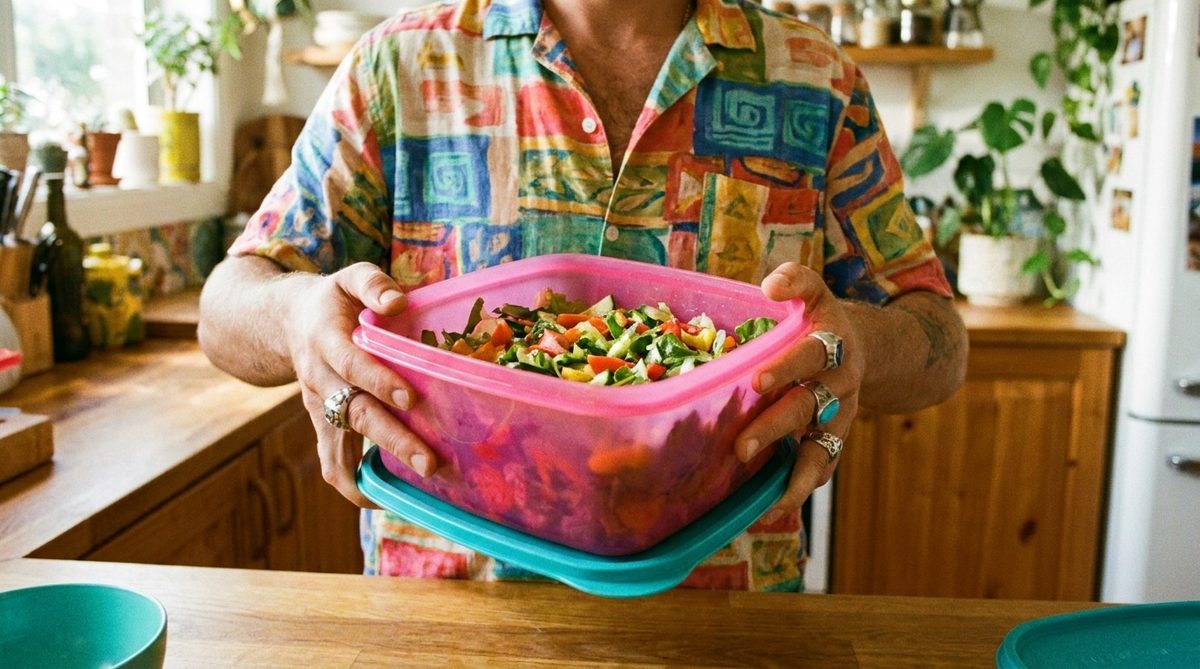
Opening the fridge and staring at a wobbling tower of stained plastic boxes is a ritual most households know too well. Beyond the endless mystery of missing lids, the way plastic degrades when it touches food raises real concerns for both health and the environment. What if the solution was stupidly simple, washable, and infinitely safer for protecting last night’s dinner without turning your kitchen into a storage unit in late spring?
The hidden cost of plastic containers in your kitchen
We have all fought with that stubborn drawer that refuses to close, always blocked by a messy pile of mismatched containers. The reality is often bitter. These containers lose their shine after a few trips from heat to cold. That famous, indelible orange stain and the unpleasant texture that persists despite boiling water and dish soap eventually discourage even the most diligent from cleaning up.
But the sad visual aspect is just the tip of the iceberg. Over time, micro-scratches line the bottom of the trays. The material degrades gently when in contact with acidic sauces or heat. The silent risk of microplastics being released into the body has become a genuine modern concern. This is why many households are looking for a healthier way to shelter last night’s leftovers.
How fabric food covers work to replace rigid plastic
The answer to this domestic headache ironically draws its inspiration from the past. Before the petrochemical era, a clean cloth sat proudly on terrines. This common-sense tip is making a triumphant return today in the form of the fabric food cover. Once adopted, this cloth protection, equipped with an elastic border like a shower cap, replaces old rigid trays without any regret.
The genius of this accessory lies in the discreet technicality of its materials. One side features colored cotton for decoration, while a coated inner side creates safe food contact. With a simple swipe of a damp sponge, the fabric cleans easily. It avoids potential leaks while maintaining the right humidity level of the preparations, never altering their chemical composition.
Why breathable covers keep food fresh longer
When you imprison a dish under an airtight lid, condensation inevitably accumulates. A few hours later, fresh radishes or tabbouleh sadly soak in water. With a good textile cover, the slight natural micro-breathability vents the excess moisture. The crunchiness of salads is preserved, allowing you to fully enjoy the sun-soaked harvests of this season.
Relying on a cloth might make you doubt its power against the aromatic strength of cheese on the neighboring shelf. The reality is reassuring. The elastic keeps the textile under perfect tension around the top of the container. The protective barrier operates effectively by preventing colonization by opportunistic bacteria, while sharply stopping the famous mix of odors within the refrigerated compartment.
How to save space in your pantry with reusable covers
Why insist on transferring the remains of a beautiful ratatouille into a new container just to pass it to the fridge? The serving bowl, the bowl, or even the cooled saucepan will do. Stretching the fabric cap over the rims is enough to finalize the storage instantly. This dramatically lightens the amount of dishes to wash after dessert.
Once the provisions are devoured, the logistics disappear entirely. Rinsed, spread out, or hung on a line to dry in the fresh air, the cover folds like a small pocket handkerchief. A tiny volume allows you to archive an entire battalion of food covers, where a single empty polymer box would occupy half of the upper shelf.
Adapting fabric covers for any dish shape or occasion
From the refrigerator to the picnic table, this item is a chameleon of preservation. From the first breakfasts on the grass in late May, this utensil naturally imposes itself in picnic baskets. Its alliance of flexibility and elastic retention allows it to stretch over a small ramequin one moment, then cap a giant bowl of vegetable salad the next. It adapts to any oval, round, or square geometry.
Pure practicality willingly gives way to elegance. Placing a prepared melon or a tart under a veil of cotton printed with joyful patterns immediately whets guests’ appetites. It transforms simple preservation into real plating, while subtly proclaiming your convictions for durable and reusable objects that stand the test of time.
How to pick the right size and material for your first set of fabric covers
You need a range of diameters. Ten to thirty centimeters covers most of what you will actually use. Small jars, large bowls, the odd bread bin. If you only buy one size, you will be stuck.
Check the hygiene rating first. Food contact certification isn’t optional. It is the baseline. The elastic matters too. Cheap rubber snaps off after a month of stretching. Buy the kind with a tight weave that resists tension. Can you put them in the washing machine? Look for clear machine-wash labels. If the care instructions are vague, toss the item.
Why making your own covers from fabric scraps beats buying plastic wrap
This is where it gets interesting. You do not need a sewing degree. You need scissors, a needle, bias tape, and old sheets with a tight weave. That is it.
Reusing worn material is the quiet revolution that erases disposable habits without breaking the bank.
This method works because it solves two problems at once. You stop buying plastic wrap, and you stop throwing away old linens. The cost is negligible. The waste drops to zero.
Is it faster than grabbing a roll of cling film? No. It takes a few minutes. But you are not just covering food. You are changing how you handle leftovers. The cloth feels different. It breathes. It lasts.
The plastic wrap sits in the drawer. It peels off. It sticks to everything. It ends up in the trash. The cloth cover goes in the wash, comes back clean, and stays ready.
Where this fits in your summer kitchen reset
It is early summer now. The light is better. The windows are open. This is the time to clean out the junk. The old plastic wrap rolls. The torn aluminum foil. The mismatched lids.
Clear out the drawers. Keep only what works. Swap the disposable habits for the durable ones. The transition is small. The impact is not.
You will probably forget the first few times. That is fine. The habit builds. The texture of the fabric against the jar rim becomes normal. The ritual of washing them becomes routine.
The goal is not perfection. It is persistence. A slightly frayed elastic is better than a fresh roll of plastic in the landfill. The cover might not be pretty. It works. That is enough.