Shogi is a type of Japanese chess, but its history is somewhat obscure. It is traditionally believed to have originated in India and then came to Japan via China and Korea, but the exact date is unknown. What is clear is that it shares DNA with Western and Chinese chess. This is a two-player strategy game where the game board has pieces with different powers. Its goal is the same as its cousin: Checkmate your opponent’s king.
But where things get interesting is the execution.
Board and Setup
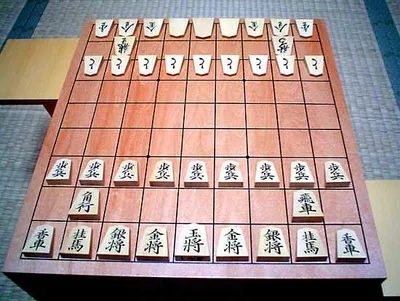
The shogi board has 9 x 9 squares and a total of 81 squares. Compare this to the Western 8×8 (64 squares) chessboard or the 9×10 dot lattice grid of Chinese chess. The difference is not just in geometry.
In Shogi, the pieces are not colored, so it is impossible to tell which one belongs to whom. The players are called white and black, with black moving first. The pieces themselves are flat, pointed pyramids with Japanese characters printed on them to indicate their value. The tip is towards the other party.
Each player starts with 20 pieces. Place symmetrically, but in a different way. The third row has 9 pcs (fu ). The tower is located one square diagonally from the right corner. The bishop (kaku ) is located one square diagonally from the left corner. The first row is the heavy hitters: Lance (Kyosha ), Knight (Keima ), Ginsho (Ginsho ), Kinsho (Kinsho ), Osho (Oshou ), and is mirrored backwards.
Shogi is unique among chess variants in that captured pieces do not die and can be replayed as part of a captor’s forces.
This is the most distinctive feature of this game. In Western chess, if you capture a piece, it disappears. The pieces you capture in Shogi become yours. Instead of moving existing pieces, you can return them to the board under your own power. This recycling of resources makes the game incredibly deep.
Move and capture
Pieces capture exactly the way they move. There are no fancy elements like pawn en passant or Diagonal Capture here. Just like western chess pieces, only knights can jump over other chess pieces.
Most pieces have short-range moves. This means that the game usually progresses more slowly than other chess variations. Let’s look at the mobility:
- King: Move one space in any direction. 8 possible moves.
- Gold General: Move one space in any direction except diagonally backwards. Six moves.
- Silver General: Move one space in any direction except backwards and horizontally. Five moves.
- ** Pawn:** Move forward one space.
- Lance: Move forward any number of empty squares.
- Knight: Jump forward two rows and one square on each side. It is significantly weaker than the Western Knight, which can move to 8 different squares.
- Bishop: Slide any number of unobstructed squares diagonally. The second most powerful starting piece.
- Rook: Slide the desired number of unobstructed squares horizontally or vertically. It’s the most powerful piece, especially if you attack the enemy territory (first 3 rows).
Promotion Rules
Promotional strategies change. With the exception of kings and golds, almost all pieces can be upgraded when entering, moving, or leaving enemy territory. If the piece no longer has valid moves, it must be promoted. This happens when a pawn, lance, or knight reaches the last row, or when a knight reaches the second-to-last row.
When you turn the piece over, the promoted rank is marked on the back.
- Pawns, Knights, lances, Silver will be promoted to Gold General.
- Promoted bishops (known as dragon horses or ryuma ) gains the ability to move one square vertically or horizontally.
- Promoted rooks (known as dragon kings or ryu ) gains the ability to move one square in any diagonal direction.
Pieces that fall into enemy territory can promote the next time they move.
The Never-Ending Game
Because the pieces can be recycled, shogi almost never ends in a draw. There will always be enough material to force a checkmate. Repeated moves are not allowed, like perpetual check in Western chess. If a player starts a sequence of repetitions, they must stop or forfeit the game.
The result? A game that feels alive. The board state is constantly changing. The balance of power is never static. It’s not just about playing against your opponent’s pieces. You are playing against their potential future moves that may already be in your pocket.
Why is this important? It changes your perspective on loss. In chess, losing a rook is a crisis. In Shogi, it’s a loan. The tension comes from knowing that your opponent can bring their pieces back into the fight at any time, often in you didn’t expect.
This is a game that requires patience. And the strange, beautiful fact Nothing is really lost.