Netflix has been on a roll, pumping out original content with alarming speed. Among the recent flood of series is La Revolution, a historical drama that attempts to reinterpret one of history’s most volatile periods. It’s not just another period piece. It’s messy. It’s intense. It’s designed to grab you by the throat and not let go.
We broke down everything you need to know before hitting play. From the cast to the historical liberties, here is the lowdown on the show that has been sparking debate since its debut.
When Did La Revolution Drop on Netflix?
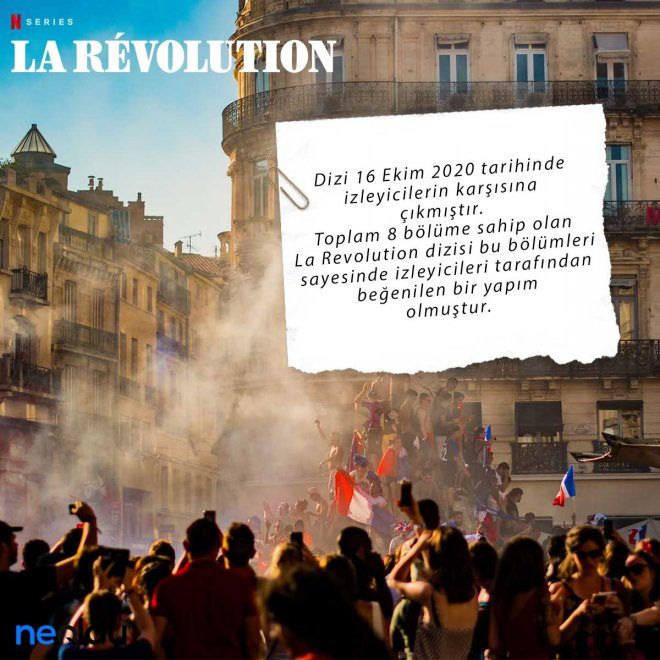
If you are looking for the release date, mark October 16, 2020, on your calendar. That is when the series first landed on the streaming platform. It didn’t just trickle out. It arrived as a complete package.
The show consists of 8 episodes.
That is a tight run. There is no filler. No bloated season arcs. Just eight hours of high-stakes political maneuvering and violent upheaval. The format works in its favor, keeping the momentum frantic and the stakes personal.
Why It Stands Out in the Historical Drama Genre
Most historical dramas treat the past like a museum exhibit. Clean. Polished. Safe. La Revolution refuses to play nice. It drags the French Revolution out of the textbooks and into the mud.
The series focuses on the chaos that followed the storming of the Bastille. But it isn’t interested in kings and queens sitting on thrones. It is interested in the people. The ordinary citizens caught in the gears of history.
This approach changes the entire flavor of the narrative.
- It feels immediate.
- It feels dangerous.
- It feels like something that could happen today.
The show runs for eight episodes, which is a relatively short commitment for a historical epic. This brevity forces the writers to cut the fat. Every scene needs to earn its place. The result is a tighter, more aggressive narrative than you might expect from a big-budget French production.
The Cast Behind the Revolution
While the plot grabs attention, the performances keep it grounded. The series features a mix of established French talent and rising stars. They don’t just recite lines. They embody the desperation and hope of a nation tearing itself apart.
The ensemble cast includes actors who bring a raw, visceral energy to their roles. You aren’t watching distant figures from history. You are watching neighbors, friends, and lovers who are forced to choose sides in a war for their souls.
What to Expect from the Story
The French Revolution is often taught as a series of dates and treaties. This show treats it as a thriller.
The story picks up in the weeks following July 14, 1789. The Bastille has fallen. The King is trapped in Versailles. Power is up for grabs. But who gets it?
The narrative weaves between different social classes. You see the aristocracy trying to maintain control through sheer will. You see the peasants organizing with terrifying efficiency. And you see the space in between—the lawyers, the journalists, the idealists—who are trying to build a new world from scratch.
It is fast-paced. It is unflinching. And it is very much about the cost of freedom.
Is

Is there a second season of La Revolution? The Status of French Drama
La Revolution manages to keep viewers glued to their screens with a grip that seems almost haunting. It is a drama based on tension, not just spectacle. The show has earned its place among favorites and hits the nerves of the audience, who crave both content and excitement. But now the silence on the production side is deafening.
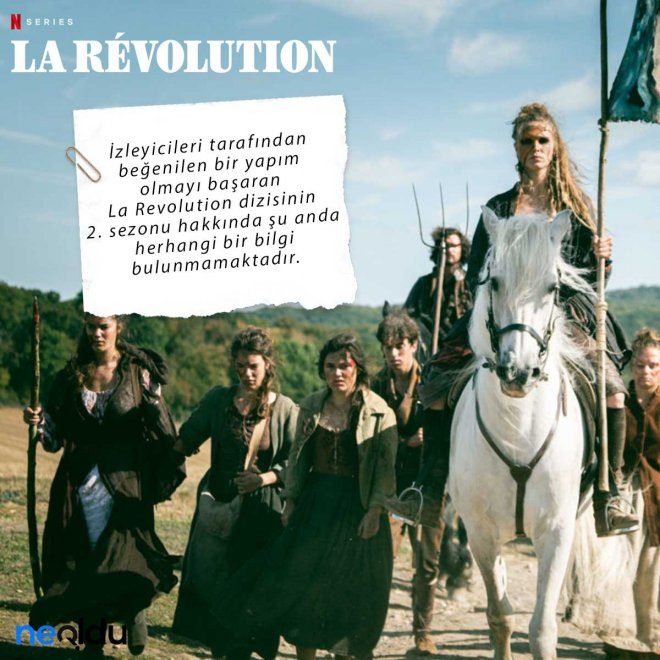
There is currently no information about the second season.
The creators have kept their cards very secret. No green light. No clues. No teasers. The end of the first run and a question mark over the capital. For fans wondering how to get news about La Revolution Season 2, the answer is frustratingly simple right now: wait.
Why the silence? Sometimes networks need time to evaluate ratings. In other cases, the story was always planned as one story arc. Or maybe the logistics are a nightmare. The truth remains hidden under official statements.
“There is currently no official word on whether La Revolution will return for a second season.”
This lack of clarity is a common frustration for fans of international niche dramas. You invest time in the world, the characters, the mystery. Then the door closes.
If you search for where to watch La Revolution, availability varies by region. Streaming rights for European productions are often fragmented. Check your local catalog. Don’t assume it’s everywhere.
The drama stands on its own merits. It does not rely on cliffhanger to justify its existence. It tells a complete, albeit intense, story. For some, that’s enough. Others are left with a feeling of incompleteness.
Will we see Paris in upheaval again? Perhaps. Probably not anytime soon. The production cycle of high-quality television is long. Budgets must be align. Actors must be free. Writers need new ideas.
Until then, the first season is the only source material. It’s a tight, compelling watch. A reminder that political thrillers can still feel fresh when done right.
But wait for more? This is the real test.
Who really built this world? The end credits reveal the powerful team behind The Eddy. The authors are divided between Aurélien Molas, Sabine Dabadie and Gaia Guasti. However, they do not act alone. Hamid Hlioua joins the team with previous experience in the show’s production team. This is a collaboration with overlapping voices who know the material inside out.
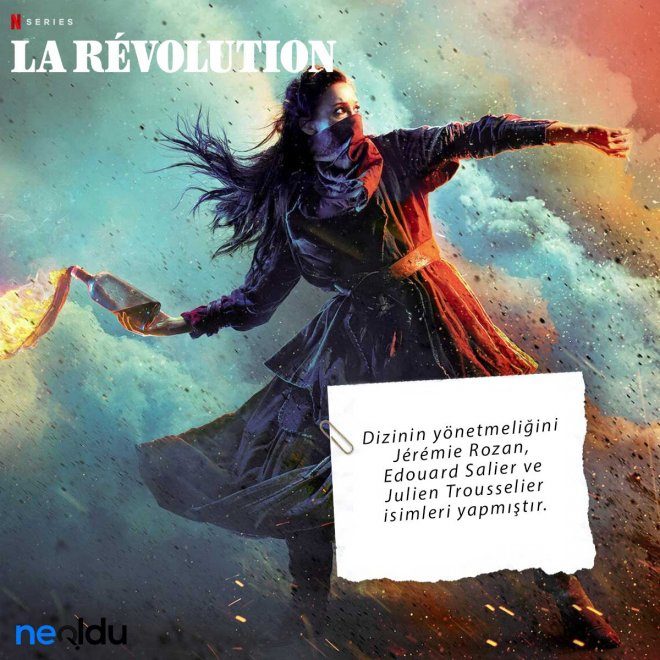
Then there is the visual language. Jérémie Rozan, Edouard Salier and Julien Trousselier are responsible for the directing responsibilities. Their shots frame the chaos. Each brings a unique rhythm to the screen. You can feel the difference in rhythm. Some shots may linger, others may come out in a hurry. This is not uniform. This is intentional. Directors don’t just shoot scenes. They curated them.
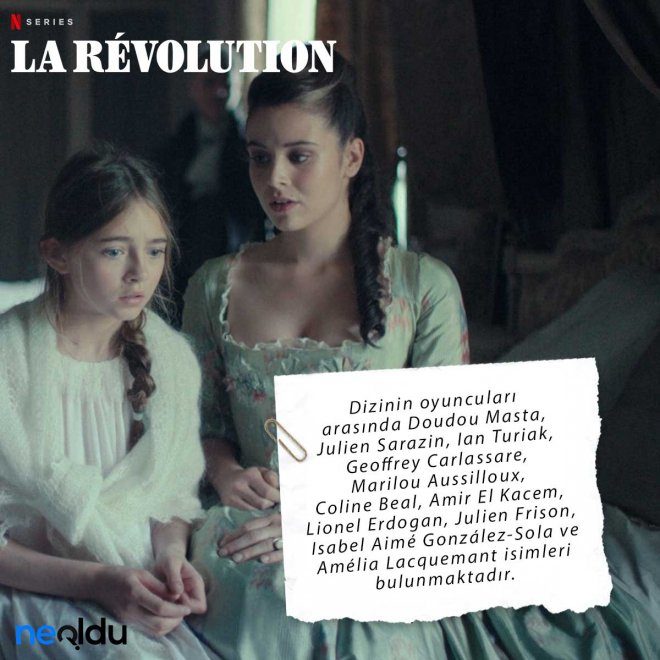
The ensemble cast is where the real texture lives. It’s not just about the big names, but the specific energy each actor brings to the screen. This series leans heavily on a mix of established character actors and rising talent, creating a dynamic group chemistry that drives the narrative forward.
The Core Ensemble
You’ve likely seen some of these faces before, even if the name doesn’t immediately click. The lineup includes Doudou Masta, known for his intense, grounded performances, alongside Julien Sarazin and Ian Turiak. Then there’s Geoffrey Carlassare, who often plays with a certain quiet intensity that fits the show’s mood.
The younger generation of actors brings a raw, contemporary feel. Marilou Aussilloux and Coline Beal anchor the youth-oriented subplots, while Amir El Kacem adds a layer of magnetic complexity to his role.
Supporting Strength
The supporting cast provides the necessary weight and local color. Lionel Erdogan and Julien Frison are fixtures in French television, offering reliable, nuanced background work that makes the world feel lived-in. Isabel Aimé González-Sola brings a distinct presence, and Amélia Lacquemant rounds out the group with her subtle, observant style.
The strength of this cast isn’t in any single superstar, but in the collective reliability of each performer.
It’s a roster built for consistency rather than flash. You can watch them navigate the plot’s twists without ever feeling like they’re selling their performances short. That’s often the mark of a well-directed ensemble — when the actors trust the material enough to underplay, rather than overact.
And that’s the thing about this particular group. They don’t need to shout to be heard. They just need to be there, reacting, listening, and letting the story breathe around them. Whether you recognize them from past projects or not, their work here is likely to stick with you.
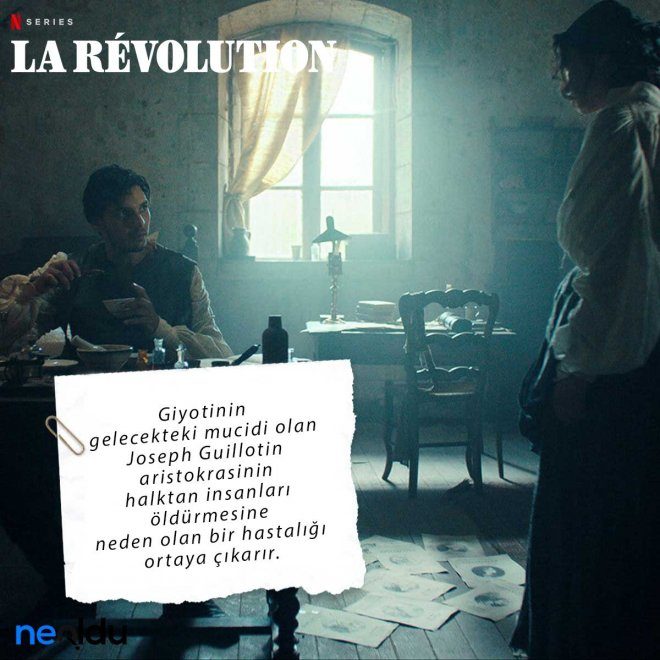
History remembers Joseph Guillotin as the French physician who advocated for a more humane method of execution. But the full story is far darker. The invention of the guillotine wasn’t just about progress in penal reform. It was a reaction to a specific, terrifying outbreak that targeted the elite.
A Disease That Targeted the Aristocracy
The crisis began with a mysterious illness sweeping through the upper classes. It wasn’t a plague of the poor, which was common in pre-modern Europe. This was selective. It struck those with wealth, power, and titles. The aristocracy was dying at an alarming rate, and the existing medical practices were useless against it. Panic spread among the nobility. They needed a solution, or they needed an end to the suffering.
Guillotin, a man deeply embedded in these circles, began to investigate. He wasn’t just treating symptoms. He was looking for the root cause. The death toll among the elite was becoming politically unstable. The king and the court were vulnerable. Stability required action.
The Discovery of “Blue Blood”
Guillotin’s research led to a shocking conclusion. The source of the disease was a new virus. He named it the Blue Blood virus. The name wasn’t just poetic. It referred to the literal discoloration observed in patients. Their veins turned a distinct shade of blue, and their skin took on a pallid, translucent hue. The virus attacked the blood itself, causing it to clot abnormally and lose oxygen.
This wasn’t a hereditary condition. It was an infectious agent. The aristocracy, with their close quarters and shared rituals, was an ideal breeding ground. The virus spread through touch, through shared spaces, through the very air they breathed. Guillotin documented the progression. First came the fever. Then the discoloration. Finally, respiratory failure.
From Cure to Capital Punishment
Here is where the narrative twists. Guillotin did not find a cure. He found a way to manage the crisis. But the solution he proposed was controversial. He suggested that the infected aristocrats, if left to die naturally, would suffer. The virus caused a prolonged and painful death. Guillotin argued that a quick, painless end was more humane than letting the disease run its course.
This logic was used to justify the guillotine. It wasn’t just for common criminals. It was initially framed as a medical necessity for the elite. The device was designed to be efficient. To sever the head instantly. To stop the suffering. The aristocracy, desperate to survive or at least to die cleanly, accepted this proposal. The guillotine became the instrument of their salvation, or so they believed.
The Legacy of a Failed Cure
The Blue Blood virus eventually burned itself out, or perhaps it was contained through stricter quarantine measures. But the guillotine remained. It became a symbol of the Revolution, of the people’s justice. The original medical rationale was forgotten. The public never learned that the device was born from a fear of a specific viral outbreak among the nobility.
Guillotin’s name is attached to the machine, but his original intent is obscured by history. He was a physician who saw a terrible disease and offered a terrible solution. The Blue Blood virus is a footnote in medical history, but its impact on political machinery
The Red Coat Rebellion
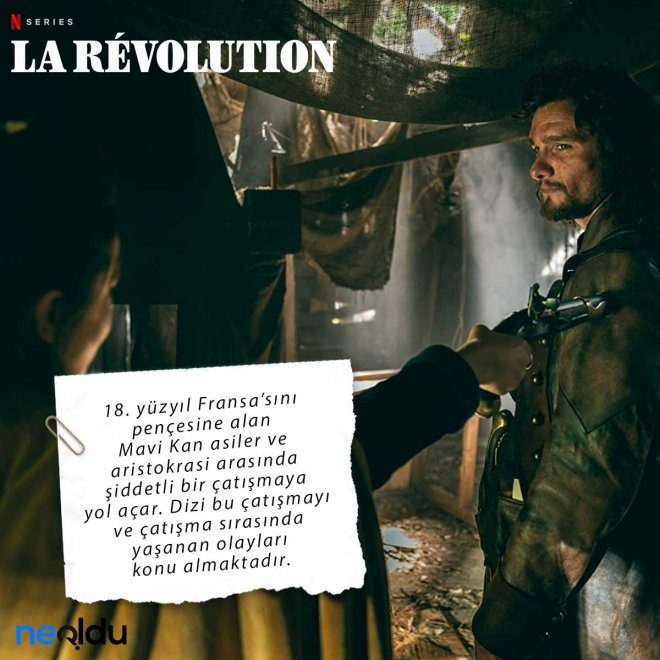
There’s blood in L’Or et la Sang, but it’s not just a metaphor. The series transports the audience directly to the heart of turbulent 18th century France, where the social fabric is torn apart. We’re not talking about a polite court gossip here. This is a violent conflict between rebels and aristocracy, and the friction was so intense that it threatened to set the whole country on fire.
The show does not shy away from the brutality of the era. Focusing on the raw conflict that defined this era, it captures the chaos of the escalating class war. Every fight feels personal. Every betrayal cuts deeper. If you’re wondering how a period drama can feel so immediate, look at the stakes. Lives hang in the balance. The crown’s grip slips.
Why is this important? Because tension is more than just background noise. This is the engine. The story is driven by these outbursts of violence and political maneuvering. You see the old order crumbling under the weight of its own greed and the growing anger of those it oppressed. It’s gritty. It’s very messy. That’s exactly why this series will grab you.
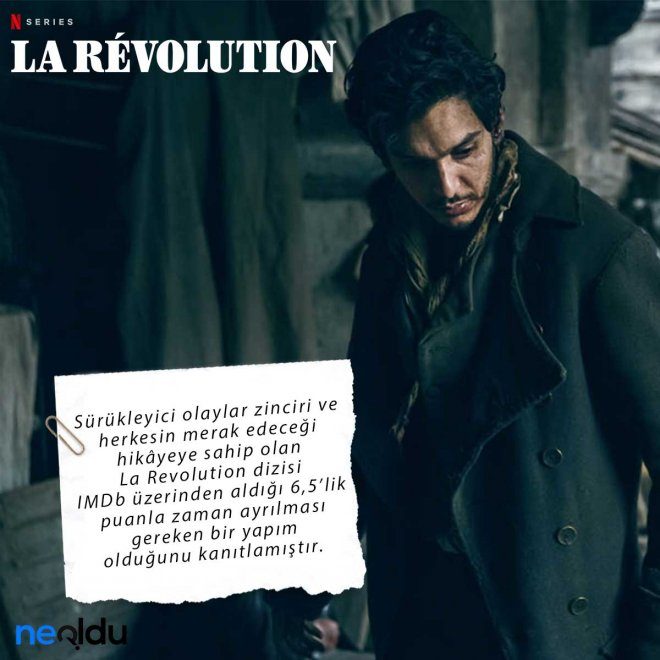
Why La Revolution is rated 6.5 on IMDb
The driving force of the story is undeniable. La Revolution builds a series of rising events that draw the audience into a story where every character is in the spotlight. It’s the kind of premise that makes you want to know what happens next, not just because of the ending, but because the stakes are so high. That momentum is well reflected on the screen.
The metrics back up the hype. The show’s high score of 6.5 on IMDb shows it’s worth your time. It’s not perfect, but it’s definitely in the “must see” category. Audience reaction was generally positive, with fans praising the pace and excitement. This combination of critical reception and audience engagement earned the show a spot on our curated list of the best streaming series.
It’s a memorable title. The questions it raises remain. In an age of disposable content, this is a rare quality.
It is 360 minutes of pure spectacle. A sprawling epic that takes the French Revolution and douses it in supernatural intrigue. Marie Antoinette is played by Jane Seymour. Georges Jacques Danton, by Klaus Maria Brandauer. Camille Desmoulins, by François Cluzet. You also have Peter Ustinov, Claudia Cardinale, Sam Neill, and Massimo Girotti lending their weight to the production. It is not just history. It is a reimagining. And the audience is split on how to feel about that choice.
Is It Accurate History or Just Entertainment?
Some viewers call it essential viewing. Period. Regardless of whether you care about the politics of 1789, they argue this is one of the best productions on the subject. There is a visceral thrill in seeing Robespierre or Danton move across the screen rather than staying confined to pages. The acting holds up. The gestures and expressions breathe life into figures we usually only know from textbooks. It tastes different watching them.
Then there is the other side of the coin. A ten out of ten rating from one viewer came with a sharp caveat. You are a monkey if you expect historical accuracy. This show is not trying to be a documentary. It is a fantasy series with a loose plot set in the late 18th century. Complaining about historical inaccuracies here is like complaining a zombie movie gets World War II wrong. Stop comparing it to a history book. Enjoy the ride.
“It is clearly stated that history is being reimagined. Do not compare it to books. Just enjoy the music, cinematography, and VFX.”
The consensus among the fans is clear: know what you are signing up for. If you want a dry, factual recounting of the Reign of Terror, look elsewhere. If you want a dark, mysterious, supernatural thriller wrapped in period costume, this is it. One viewer finished the first season hooked. They loved the eerie intro. They loved the effects. They are waiting for the second season.
Why It Works: Style Over Substance?
It is not a drama about events. It is a re-told story. A re-designed narrative. But that does not mean it fails on craft. The acting is solid. The music is lush. The costumes are detailed. The special effects do their job. It is well-made.
One reviewer called it a “great bang for the bucks.” The men are handsome. The horses are magnificent. The women are beautiful and active in the plot. It beats out lesser period dramas like The Walking Dead ’s historical peers. It grabs you from the first scene. No spoilers needed. You just have to commit.
It is a thriller. It is a drama. It mixes genres that rarely sit well together. But here, they work. It is for the pop-culture fan who wants their history with a side of magic.
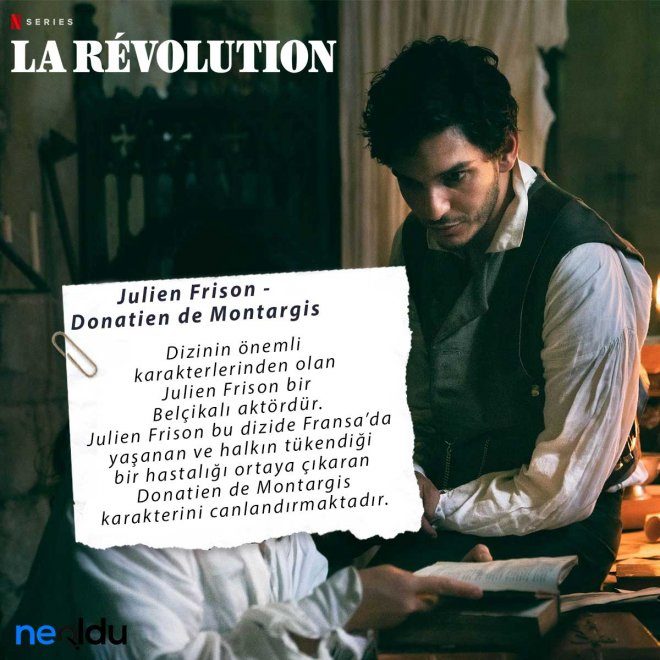
Cast Spotlight: Julien Frison as Donatien de Montargis
The ensemble is strong, but the character of Donatien de Montargis stands out. Portrayed by Belgian actor Julien Frison, he plays a man who discovers a disease wiping out the French populace. Frison is not a new face. He has worked steadily on projects like Angel At Sea, Rondo, and Le Fantôme de Canterville.
His presence adds a layer of grounded mystery to the fantastical elements. He is the anchor. The man who sees the rot beneath the revolution. In a show filled with larger-than-life historical figures and supernatural twists, his character provides the human stakes. The disease he uncovers drives the plot forward. It connects the political chaos to the physical decay of the people.
Frison’s performance is quiet but intense. He does not shout like Danton. He does not scheme like Robespierre. He investigates. He suffers. He watches the world burn. And in doing so, he makes the abstract horror of the revolution feel personal.
The show is not for everyone. It demands a suspension of disbelief. It asks you to accept that history is a canvas for fantasy. But for those willing to play along, it delivers. The visuals are stunning. The mood is thick. The story moves fast. It is a different kind of historical epic. One that bleeds magic instead of just blood. And strangely, that might be exactly what makes it compelling. What happens when the truth is more terrifying than the myth? The show seems to suggest the answer lies in the shadows. Waiting to be found.
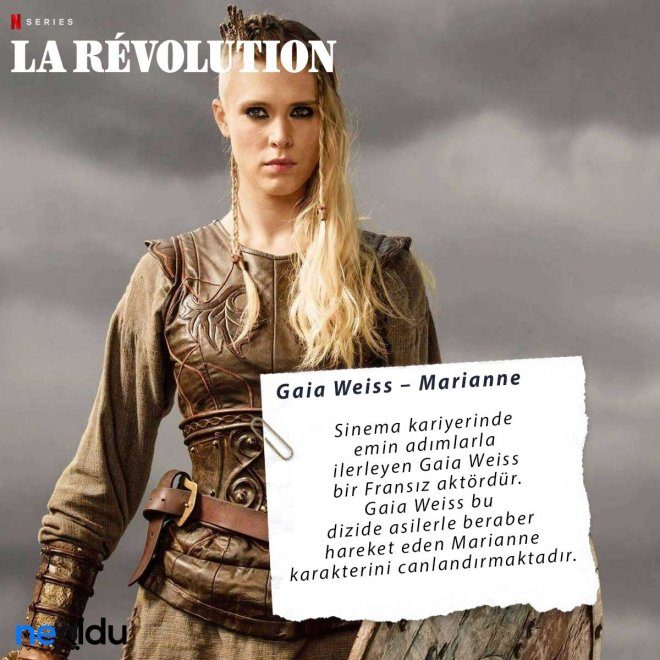
Gaia Weiss plays Marianne in the French Rebellion series
Gaia Weiss navigates her film career calmly. She is a French actress with an already impressive resume. You might recognize her from “Vikings.” Or maybe “Mary Queen of Scots”. She also appeared in “Hercules: The Legendary Journeys” and the Netflix hit “Black.” She is one of those rising talents that industry insiders are paying attention to.
Now she is in a new series playing Marianne in the new series. The character is part of the rebellion. She moves with them. She fights alongside them.
“Marianne is one of the rebels.”
This role adds another layer to an already diverse career. She balances historical drama with modern crime drama. It shows range. It shows she is not typecast.
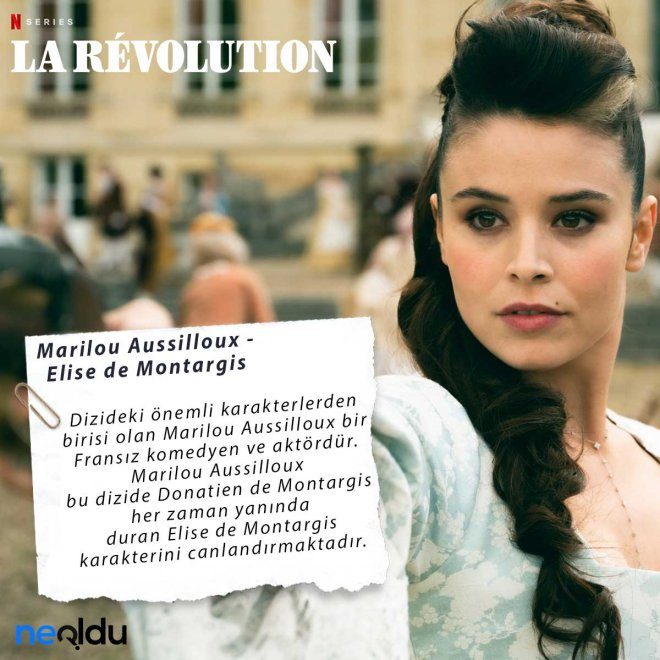
Marilou Aussilloux as Elise de Montargis
Marilou Aussilloux is more than just a face in the crowd. She is a French comedian and actor with extensive experience in comedy works such as “Le Doudou”, “Adieu Les Cons” and “Jeux d’Influence”. But what about here? She is the anchor.
In this series, Aussilloux plays Elise de Montargis. Although the name sounds great, the personality is based on loyalty. Elise was always on Donatien de Montargis’s side. When things go wrong, she’s there. She’s still there when the drama reaches its climax. This is a role defined by the class, no flamboyant speeches.
“Elise is a constant presence in Donatien’s chaotic world.”
This character’s work may resonate with fans who want to see a solid support system in a complex story. Aussilloux brings a certain energy to the work that is both professional and dynamic, yet closely related to the plot’s central relationships. It’s not just about portraying a spouse or partner. It’s about the structural integrity of the scene.
The last chapter
The dust has finally settled. After eleven parts and countless hours of scrolling, the story ends here. No big reveal. No plot twists that change everything. Only the quiet reality of the end.
What remains is a not a perfect summary, but a collection of moments. The highs. The lows. Things we argued about in the comments and songs that were stuck in our heads for weeks. It’s chaotic. It’s real.
Think about why these stories matter at all. They fill the gaps between our own lives. They give us characters we can relate to when our own seem too complicated. They offer an escape, but also a reflection.
We don’t just consume pop culture; we live inside it for a while.
It’s not a question of whether it will last. Nothing does. The question is how much it leaves behind. Some titles fade quickly. Others remain in the cultural subconscious for years. This? It’s somewhere in between. A solid entry. A memorable one. Not a classic, but not forgotten.
Who knows what’s next? Another franchise. Another trend. Another wave of nostalgia for things we barely remember. The cycle continues. And we are here, watching, waiting, analyzing. Always analyzing.
It ends with a shrug and a smile. Not because it’s perfect. But because it was something. And in the end, that’s usually enough.