It didn’t go well at first.
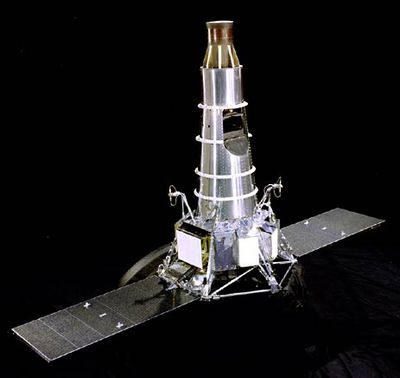
Project Ranger was NASA’s first real shot at reaching the Moon. The agency needed data. They needed images. They needed to prove they could get a machine there without it exploding in Earth’s orbit or flying off into the void.
The result was a mix of failure and brutal success.
Ranger 1 and 2 were supposed to go up. They launched in August and November of 1961. Both failed to leave Earth orbit. They just sat there, useless satellites circling a planet that wanted them to go higher.
Then came Ranger 3. Launched in January 1962, it missed the Moon entirely. It didn’t crash. It didn’t land. It just kept going, slipping into an orbit around the Sun. A ghost in space.
Ranger 4 tried a different approach. Launched in April 1962, it was designed to crash-land. And it did. It became the first U.S. spacecraft to hit the lunar surface. But it was a blind hit. The cameras failed. The instruments failed. It smashed into the regolith with no photos and no data.
Ranger 5 followed the same tragic path as Ranger 3. It missed. It flew off.
For a while, it looked like the Americans were never going to touch the Moon.
Then the strategy shifted. The team stopped trying to land softly. They stopped trying to orbit. They started aiming directly for impact. But this time, they built better eyes.
Ranger 7, 8, and 9 changed everything.
Launched between 1964 and 1965, these three probes didn’t just fly past. They flew close. They transmitted more than 17,000 high-resolution photographs before the inevitable crash.
The First Clear Images
Why did the final three succeed where the first five failed?
Better engineering. And a willingness to accept destruction as part of the process.
Ranger 7 was the first to deliver. It sent back thousands of images showing craters and rocks in sharp detail. It got as close as 300 meters above the surface. You could see the texture of the moon. You could see the roughness.
Ranger 8 and 9 did the same. They mapped large areas. They provided the high-resolution data that scientists had been starving for.
Before Ranger, the Moon was a blur of white light in telescopes. After Ranger, it was a landscape. It was a place with geology. With history. With impact sites.
Why It Matters
These probes weren’t just about proving capability. They were about preparation.
Apollo astronauts needed to know what they were landing on. They needed to know if the surface was soft dust or hard rock. They needed to know where the safe spots were.
The Ranger program provided that map.
It wasn’t pretty. The spacecraft were destroyed. The missions were expensive. The early failures were embarrassing. But the data was real.
NASA learned how to aim. They learned how to transmit. They learned how to survive the journey, even if the end was violent.
The Moon wasn’t a mystery anymore. It was a target. And it was reachable.