
Sharks have a bad reputation. Mainly because people forget they are fish. Especially since they look like monsters. But not all sharks swim. Some just wait.
Meet the angel sharks.
They don’t patrol coral reefs. They don’t hunt tuna. They lie on the sand. They look like rocks. Or flat stones. Or if you’re feeling poetic, fallen angels with gills.
Masters of camouflage
Angel sharks are bottom dwellers. They live on the sandy or muddy seabed. Their bodies are flat. Their heads are broad. Their eyes are on top of their heads. This setup is designed for one thing: ambushing.
They bury themselves in the sediment. Only their eyes stick out. They look like parts of the seabed. Then, a fish swims by.
Boom.
They strike. Quickly. Efficient. Swimming is not required.
Not Your Average Shark
Most sharks are skinny. Torpedo shaped. Built for speed. Angel sharks are the opposite. They are stout. Wide. They resemble rays more than sharks. And they are. Genetically, they are closer to rays than great white sharks.
This body plan works. This allows them to hide. It lets them wait. It allows them to survive.
Where they live
Angel sharks are found in warm, temperate waters. Atlantic. Pacific. Indian Ocean. They prefer shallow waters near the coast. Sometimes only a few meters deep. This is bad news for beachgoers who don’t watch where they step.
But they are not aggressive. They don’t hunt people. They hunt fish. Crustaceans. Cephalopods. Anything that wanders too close to the sand.
Why they are important
Angel sharks are indicators. When they are healthy, the ecosystem is healthy. If they disappear, something is wrong.
They’re vulnerable. Overfishing. Loss of habitat. They are slow. They cannot escape the trawlers. They can’t hide from nets.
We need to know them. Not as monsters. As neighbors. As part of the ocean’s balance.
Next time you’re at the beach, look down. Is it a rock? Or a shark?
You might want to check.
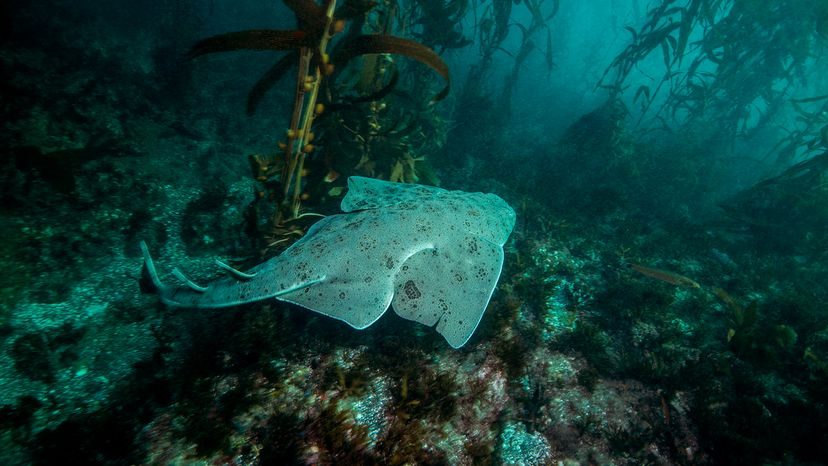

The Squatinidae Misnomer and the Real Story of Angel Sharks
First, a quick clarification on taxonomy because it matters. Angel sharks belong to the family Squatinidae, which is the sole family within the order Squatiniformes. The name isn’t just poetic flair; it refers to their flattened pectoral fins. These fins spread out like wings, creating a halo effect around the head. They are also called sand devils. These sharks live on the sea floor. They wait. They ambush unsuspecting prey buried in the sand. There are about 24 recognized species scattered across global waters. They are bottom-dwellers. They are patient.
But they are not bullhead sharks. That is a different animal entirely.
Bullhead Sharks: A Different Kind of Bottom Feeder
Bullhead sharks, belonging to the family Heterodontidae, share the ocean floor with their angel counterparts but operate on a completely different strategy. While angel sharks are flattened ambush predators, bullhead sharks have a more traditional shark body shape, though still somewhat dorso-ventrally compressed. They are not in the same family. They are not in the same order.
The name “bullhead” comes from their distinct head shape, which resembles that of a bull. They have small, horn-like projections above their eyes. These are not true horns but modified sensory pores. They help them detect prey in the dark depths.
Bullhead sharks are found in shallow coastal waters. They prefer rocky reefs and kelp forests. They are nocturnal. They hunt at night. Their diet consists of hard-shelled invertebrates. Crabs. Lobsters. Sea urchins. Barnacles. They have strong, plate-like teeth designed to crush shells. This is a key difference. Angel sharks use suction and surprise. Bullhead sharks use brute force and specialized dentition.
Why the Confusion?
People mix them up. Both are bottom-dwellers. Both are often found in similar habitats. Both are relatively small compared to great whites or hammerheads. But their evolutionary paths diverged long ago. Angel sharks are more closely related to rays and skates than they are to bullhead sharks. Bullhead sharks are more closely related to typical sharks like carcharhinids.
This distinction matters for conservation. Angel sharks are critically endangered in many regions. Bullhead sharks, while not immune to threats, are generally more abundant. Understanding the difference is the first step in protecting them.
Where to Find Bullhead Sharks
Bullhead sharks are found in temperate waters around the world. Some species are endemic to specific regions. The Pacific horn shark (Heterodontus francisci ) is common along the Pacific coast of North America. The bullhead shark (Heterodontus portusjacksoni ) is found off the coast of Australia. Each species has its own habitat preference. Some like deeper waters. Others stay in shallow bays.
Their visibility is limited. They are shy. They hide during the day. They emerge at night to feed. This makes them hard to study. Hard to count. Hard to protect.
The Real Threat
Overfishing. Habitat destruction. Climate change. Bullhead sharks are not immune. Their slow reproduction rate makes them vulnerable. They have small litters.
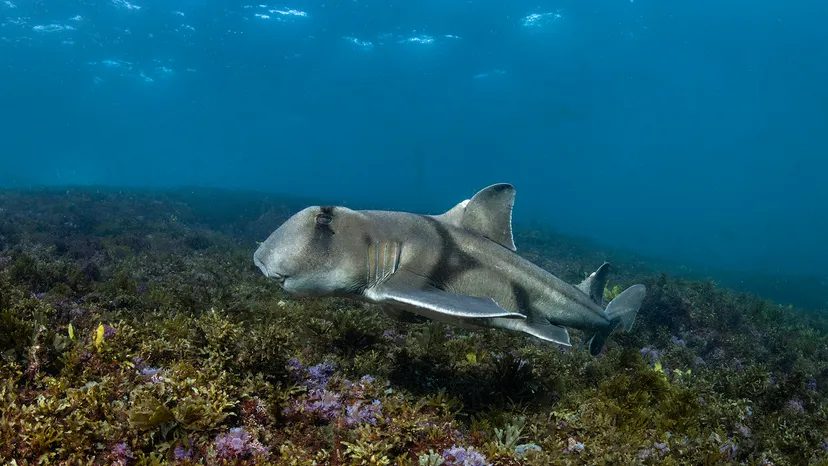
There are roughly nine species in the Heterodontidae family, commonly known as bullhead sharks. The name is slightly misleading, as the aggressive bull shark is not actually related to them. These sharks earned their moniker because they are small, bottom-dwelling feeders with distinctly wide, flattened heads.
Among them, the Port Jackson shark (Heterodontus portusjacksoni ) stands out. It is the largest of the group and a resident of Australian waters. Adults can grow up to 5.4 feet, or about 1.65 meters long.
4. Carpet Sharks
The carpet shark family (Orectolobiformes) is a diverse order of sharks named for the often intricate, carpet-like patterns on their skin. They are primarily benthic, meaning they spend most of their time on or near the sea floor.
These sharks are masters of camouflage. Their mottled colors allow them to blend into coral reefs, rocky outcrops, and sandy bottoms. This adaptation helps them ambush prey and avoid larger predators.
Unlike the sleek, open-water hunters, carpet sharks tend to be slow-moving. They rely on stealth rather than speed. Many species have barbels around their mouths, which help them sense prey hidden in the sand or crevices.
The zebra shark is one of the most recognizable members of this group. Juveniles often have bold stripes, which fade into spots as they mature. This change in appearance may serve different survival functions at different life stages.
Other notable species include the wobbegong sharks. Known for their frilly beard-like appendages, these ambush predators lie in wait for unsuspecting fish to swim by. Their mouth is positioned underneath their head, allowing them to snap up prey from the bottom without exposing their body.
Carpet sharks are generally harmless to humans, though their bites can be painful due to their sharp teeth. They play a key role in reef ecosystems by controlling populations of smaller fish and invertebrates.
Their reliance on specific habitats makes them vulnerable to habitat destruction and overfishing. Conservation efforts are increasingly focused on protecting the reefs and seafloor environments they depend on.
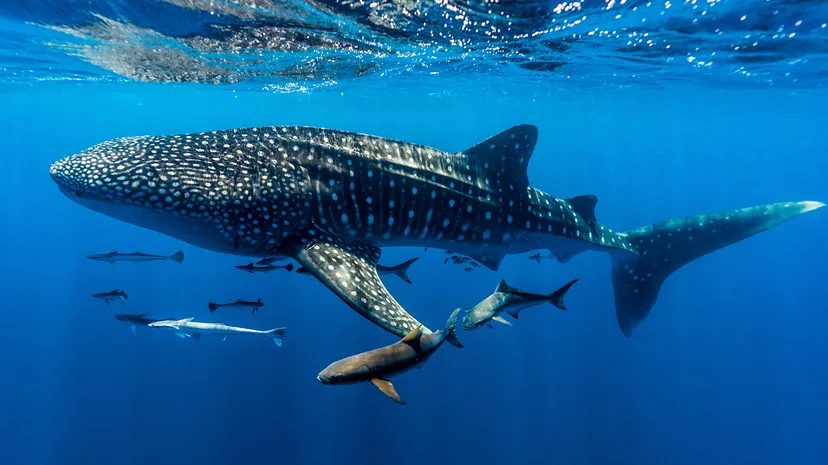

Orectoliformes is not just a taxonomy. It is a study of strange adaptations. You have carpet sharks, named for their carpet-like patterns. Nurse sharks sleep in the sand. Whale sharks filter plankton. Zebra sharks look like smiling rays.
Then there’s the hammerhead shark.
When you think of sharks, you probably imagine the sleek torpedo shape of a great white shark. The hammerhead defies that. Its head is laterally expanded into a clear T-shape. This is not just for show. It is a biological sensor array.
How the hammerhead shark’s head works
The cephalofoil—that’s the scientific term for the hammer – houses the shark’s sensory organs. Specifically, the ampullae of Lorenzini. These are electroreceptors. They detect small electric fields created by prey hidden in sand or mud.
A normal shark’s head behaves like a single sensor. A hammerhead shark’s head spreads these sensors widely. Think of it as widening the aperture on a camera lens.
“The wide distance between the eyes and sensory organs enables better depth perception and a wider field of vision.”
This geometry gives them a 360-degree view. No blind spots. They can find prey buried underground as they swim forward. It’s an evolutionary advantage that makes them effective hunters.
Why form is important
Most sharks rely on speed and ambush. Hammerheads use precision.
Their unique head shape also affects hydrodynamics. Some studies suggest that the T-shape provides better lift and maneuverability at slow speeds. This is important when scanning the ocean floor.
They’re not the only sharks with weird heads, but they’re the most iconic. Great white sharks follow a different survival strategy. The nurse shark stays low. The hammerhead shark controls the water column sensory-wise.
Where to find them
Hammerhead sharks are found in tropical and temperate waters worldwide. The scalloped hammerhead is the most common. They often form large schools. This social behavior is rare among sharks.
Schooling offers protection. It also helps in hunting. A group can herd fish into tight balls, making them easy to eat.
Are they dangerous?
Not really.
Despite their impressive appearance, hammerhead sharks rarely attack humans. They are curious. They examine objects. But they don’t see humans as prey.
The whale shark is harmless. The nurse shark is docile. The hammerhead shark is careful. These are not monsters. They are specialized animals with specific niches.
Big picture
Understanding these differences matters. hammerhead conservation efforts require different strategies than nurse sharks. One needs open water and large prey. The other needs benthic organisms and invertebrates.
We often group all sharks into one group. “Save the sharks.” That sounds good. But the whale shark eats plankton. A great white shark eats seals. A hammerhead shark eats rays.
One size does not fit all.
The hammerhead shark’s head is a reminder that evolution doesn’t have a template. It’s an experiment. It takes risks. Sometimes the result looks like a hammer. Sometimes it looks like a carpet.
We are still learning how these sensory systems interact with water chemistry. New study **
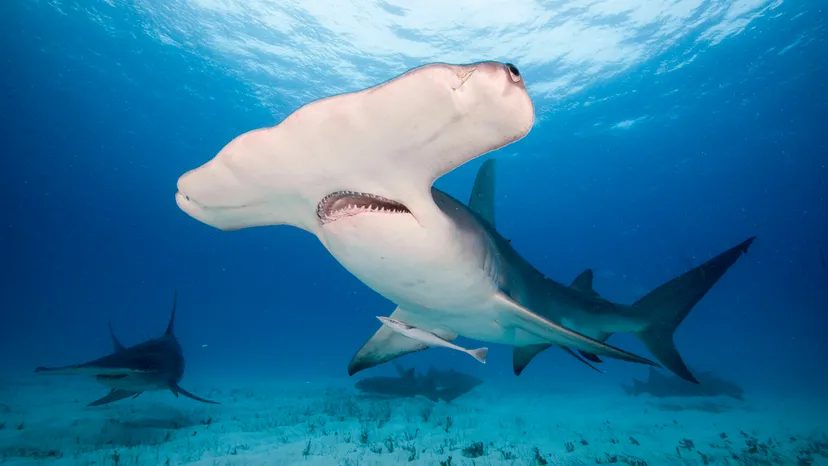
The idea that hammerhead sharks are just one species of fish is a common misconception. It is not a single species but a whole family scientifically known as Sphyrnidae. They are united by a distinctive cephalofoil or hammer-shaped head that serves as the group’s namesake. But within this family, the differences are great. At the smaller end of the spectrum is the bonnethead, a modest creature that is only 3.5 feet (1 meter) long. At the other extreme is the great hammerhead shark, a huge predator that can grow up to 18 feet (5 meters) long. This large difference illustrates how diverse the group actually is, despite their common, odd head shape.
Understanding the biology of mackerel sharks
If we go beyond hammerheads, we come across another special category, often called mackerel sharks. This group includes some of the most agile and efficient swimmers in the ocean. Built for speed and endurance, these sharks can travel long distances in search of prey. Their physiology allows for a higher metabolic rate than many other shark species, allowing them to maintain body temperatures of the surrounding water under certain conditions. This adaptation gives them a significant advantage in cooler waters where other sharks may slow down.
The most important species of the mackerel shark family
Several well-known sharks fall into this category. The great white shark is perhaps the most famous shark, recognizable by its streamlined body and powerful tail. Another prominent example is the Mako shark, which is considered one of the fastest sharks in the sea. These species share common characteristics, such as large, sickle-shaped teeth and robust muscle structure. They are top predators and play a crucial role in maintaining the balance of marine ecosystems.
Why does size and shape matter?
The different sizes of hammerheads and the special characteristics of mackerel sharks reflect different evolutionary strategies. Hammerhead sharks use their broad heads to improve binocular vision and electroreception, helping them locate prey hidden in the sand. Thanks to their torpedo-shaped body, mackerel sharks are optimized to hunt fast-moving prey over long distances. These adaptations are not just interesting facts; They explain how different sharks have created unique niches in the ocean.
Conservation Implications
Understanding the diversity of these groups is crucial for conservation efforts. Treating hammerheads as a monolith can lead to ineffective management strategies because the needs of a small bonnethead are significantly different from those of a large hammerhead shark. Similarly, recognizing the special ecological role of mackerel sharks helps to design targeted conservation measures. Overfishing and habitat loss threaten these species, and a nuanced understanding of their biology is essential to their survival.
The future of shark research
Advances in technology allow scientists to study these sharks in more detail. Tagging programs provide insights into previously unknown migration patterns and eating habits. This information is important for the creation of effective marine protected areas. As we learn more about the complexities of shark behavior and physiology, we can develop better policies to ensure their continued presence in our oceans. The complexity of these animals requires an equally complex approach to their conservation.
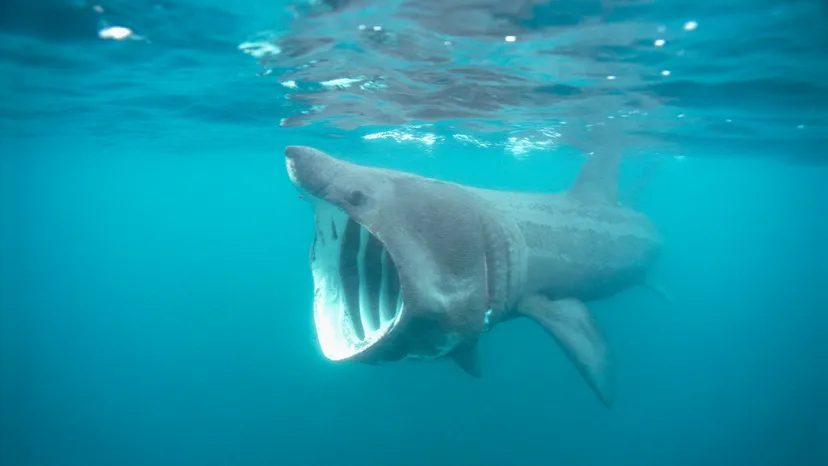
Lamiidae, commonly known as mackerel fish, is not a single lineage. This is a large group containing about 22 species in 10 different families. This taxonomic diversity means that fast predators such as basking sharks do not share much body DNA with slow-moving, filter-feeding giant sharks such as basking sharks. However, they are all under the same umbrella.
To understand the Mako shark, we need to look beyond the generic “shark” label. These animals range from fast and fierce animals to rare deep sea creatures. Here we take a closer look at some of the most unique members of the Order.
The Thresher’s Signature Move
Thresher sharks (family Alopiidae) consist of three distinct species. Their common name comes directly from their most distinctive feature: their tail, which makes up almost half of their body length. The upper lobe is long, scythe-like, and powerful.
In this case, the name “Thresher” is basically synonymous with sickle. They use this huge tail to stun or kill their prey, often slamming it into the surface of the water. This is a special hunting technique that sets them apart from other lamniformes.
Speed and Power: The Shortfin Mako
If you’re looking for true athleticism, the mako shark (Isurus oxyrinchus ) is the benchmark. With a long, sharp nose and streamlined body, it’s built for speed.
But speed is not the only advantage. The mako possesses one of the most impressive bite forces among sharks. This combination of hydrodynamics and breaking capacity makes this vessel one of the apex predators of the high seas. Yes, it’s fast, but it’s also a weapon.
深海の奇妙なもの: ゴブリンシャーク
それから、ゴブリンシャーク (ミツクリナ オウストニ ) です。 深海で発見されたもので、まるでホラー映画から飛び出してきたような見た目です。 最も顕著な特徴は、鼻先にある大きな肉質の突起です。
その長く伸びた鼻はただの見せかけではありません。 その感覚器官は、砂や隙間に隠れている獲物によって生成される微弱な電場を感知することができます。 スピードよりも驚きと特殊な知覚に頼る、ゆっくりとした動きの待ち伏せ捕食者です。
The Gentle Giant: Sand Tiger Shark
The sandbar shark (Carcharias taurus ), also known as the gray nurse shark, swims slowly. Found in temperate and tropical waters around the world.
Despite its creepy appearance, with its teeth sticking out even when its mouth is closed, it usually moves slowly. This is in stark contrast to the energetic lifestyle of mako and thresher sharks. It represents different evolutionary strategies in the same order.
Filter Feeders: Basking and Megamouth
Not all lamniformes hunt fish. Some have evolved into giant filter feeders.
the basking shark (Cetorhinus maximus ) is one of the largest fish in the ocean. They swim with their mouths open to filter plankton from the water. Although whale sharks are not sheep, they share this ecological niche with whale sharks. The closest relative of the Lamiidae family is the megamouth shark (*
Great promoter of the shark family
Requiem sharks are more than just noise in the ocean. They are large migratory predators of the family Carcharhinidae. If you’re looking at marine heavyweights, these are the ones to keep an eye on. Their behavior, habitat and even their body color tell the story of how they survive in a world that is increasingly hostile to them.
Let’s take the oceanic whitetip shark as an example. The name is literal. Carcharhinus longimanus The body is dark gray, but the tips of the fins are pure white. It has a dark blue, high-contrast exterior that makes it easy to spot. But don’t let the elegance fool you. These sharks are known for their bravery and often approach ships with an aggression that borders on curiosity. This curiosity gets them into trouble. They are often caught as by-catch in longline fishing because they attract baited hooks.
Then there’s the bull shark. Carcharhinus leucas. This species makes shore swimmers nervous. Why? Because it’s not just about the salty open sea. It can be traced surprisingly close to human activity all the way to sea estuaries. Its dangerous reputation stems from this duplicity. They live where people swim. They are not necessarily more aggressive than other sharks, but they share space with us in a different way than most sharks.
Near the shores of the coral-filled waters of the Indian and Pacific Oceans, the blacktip reef shark resides. Carcharhinus melanopterus. The name is exactly what you’d expect. The fins, usually the dorsal and pectoral fins, are black. They are coral reef experts. They are usually seen swimming underwater in schools. They are smaller and more agile than the oceanic giants, and are closely integrated into the ecosystem of the reef itself.
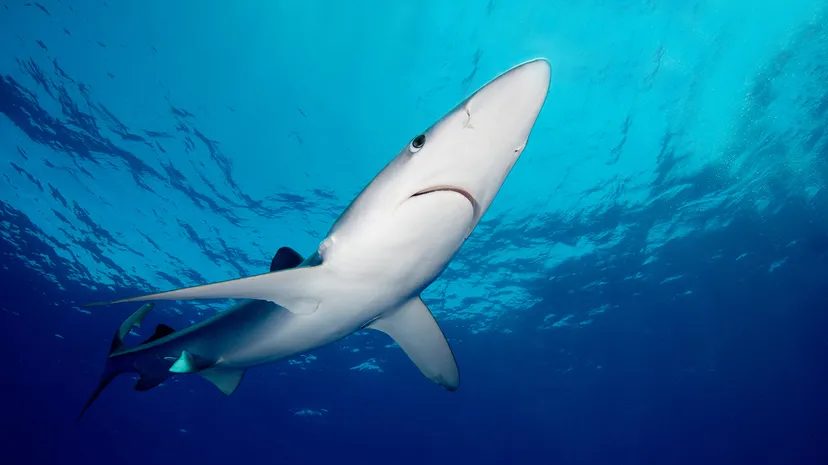
Finally we have Blue Shark. Also known as great blue shark (Prionace glauca ). The surface is smooth and grey-blue, and the belly is bright white. Designed for high speeds and long distances. But the harsh truth is that blue sharks are near threatened. They are often caught as bycatch. Not because fishermen target them, but because they live everywhere in the open sea and love to eat bait with hooks.
Why is this important? Because these species represent various strategies for surviving in the shrinking ocean. Understanding who they are is not a classification science. It is understanding the threat they face.
The oceanic whitetip’s white fins is very eye-catching in the deep sea. The presence of the bull shark in the river is a reminder that nature does not respect political or geographical boundaries. The blacktip’s reliance is dependent on the reef, damage to the reef is a direct threat.
We often think of sharks as lonely hunters. However, these requiem sharks will teach us another way to survive.