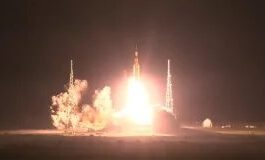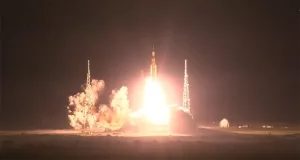
The moon calls again. This time the signal was clear. After two previous setbacks, the Artemis 1 mission finally launched on schedule. The uncrewed flight took off from Cape Canaveral at 7:47 a.m. ET. It was the third attempt. The engines roared. The sky was clear. Everything went according to plan.
This wasn’t just a launch. It was a high-stakes exercise. NASA is using this unmanned test to prepare for the return of humans to the moon. This goal is bold. The stakes are even higher. If the experiment is successful, four astronauts will follow in 2025.
Why Artemis 1 matters now
We’re not just going to fly to the moon. We are relearning how to get there. The Artemis-1 mission is an important proof of concept for the new hardware. There are two main systems under the microscope here. The first is the Space Launch System (SLS). This is the latest heavy lift rocket developed by NASA. It’s powerful. It’s expensive. It needs to work.
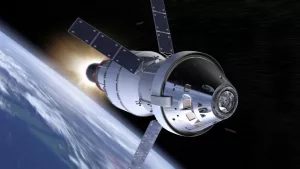
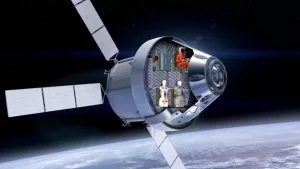
The second piece of hardware is the Orion spacecraft. The capsule was built with the support of the European Space Agency (ESA). It is designed to carry humans far from low Earth orbit. The mission tests, both systems were tested under real conditions. There are no simulators here. We only have the vacuum of space and the harsh radiation of the cislunar environment.
“The Artemis 1 flight to the moon, to its orbit and back is intended to test the newly developed SLS rocket and the Orion space capsule manufactured in Europe under real conditions.”
Hardware under stress
The SLS rocket is NASA’s solution for heavy transport. This is not a reusable vehicle like SpaceX’s Falcon 9. This is a disposable workhorse. The first stage uses modified space shuttle engines. The solid rocket boosters are based on Space Shuttle technology, but modernized. The upper stage is the Interim Cryogenic Propulsion Stage (ICPS), which provides the final thrust to escape Earth’s gravity.
If SLS fails, the mission fails. Once the rocket is in flight, it has no abort mechanism. This design is based on the redundancy of electronics and propulsion systems. Engineers simulated these launches for years. Now they have to watch them happen.
The Orion capsule is the crew’s living quarters. It’s a small metal cone. Life support systems, navigation computers and radiation shielding have been installed inside. The capsule must survive the journey to the moon, the lunar orbit and the fiery reentry to Earth. Reentry speeds will be high. Much higher than what the Apollo astronauts experienced. The heat shield must hold.
Flight path and future goals
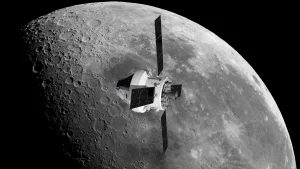
The mission profile is complex. SLS launches Orion into a near-rectilinear halo orbit around the moon. This is a stable orbit away from the lunar surface. The capsule orbits the moon for several days. Tests navigation systems, communication links and thermal controls. After that, the fire its engines and it returns to earth.
Reentry takes place across the Pacific Ocean. The recovery team is waiting. They must secure the capsule and extract the data drives. These drives contain terabytes of telemetry data. This information will determine the success
Half a century has passed since man last walked on the moon. Those days seem distant, almost mythical. Plans have now changed. After decades in Earth orbit, space agencies is preparing to return astronauts to the moon. The United States and its European partners are leading the charge. Their plans are the most advanced in the world.
Return to lunar orbit
The purpose is not just to visit. It is sustained presence. NASA’s Artemis mission aims to land the first woman and person of color on the moon. This mission is part of a broader effort to establish a long-term base. The European Space Agency (ESA) is working closely on this effort. Their contributions include critical modules of the Gateway space station. The space station orbits the moon and acts as a staging point for surface missions.
Why is this important now? Technology has improved. We can go further, stay longer and do more science. The south pole of the moon is the main target. The water ice there can be used as fuel and to sustain life. This reduces the need to transport everything from Earth. It changes the cost equation for space exploration.
European participation
ESA’s role is very important. They are not just observers. They build hardware. The Lunar Gateway contains a power and propulsion module developed with European input. This module keeps the space station in lunar orbit. Responsible for maintaining the station and avoiding emergency situations.
This partnership strengthens international relations. We share the financial burden. We also bring together special expertise. NASA brought the launch capabilities and landing systems. Europe brought the scientific equipment and orbital infrastructure. Together, they are working to create a sustainable model for deep space exploration.
Challenges remain
Funding is always a concern. Political will varies. Delays happen. Artemis’ timeline has changed many times. Critics argue that these plans are expensive and risky. Dates may be delayed due to launch failures, technical glitches or budget cuts. However, there is momentum. Several countries are investing in lunar infrastructure. China has its own plans. It has already been sent to the far side of the moon.
Competition drives innovation. It crosses the boundaries of propulsion, life support and robotics. It’s not just flags and footprints. It is the next step in human expansion. We no longer think of the moon as a distant goal. It is becoming a destination.
What do we do when we get there? The answer is still being formed. But the way is clear. We are returning The silence of the last 50 years is coming to an end.
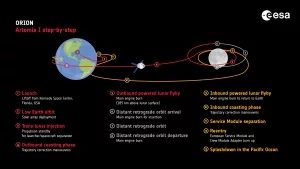

Die NASA hat klare Pläne. Drei Flüge zum Mond stehen im Artemis-Programm zunächst auf dem Zettel. Zuerst kommt der unbemannte Testflug Artemis-1. Er dient als letzte Prüfung für die speziell für Mondmissionen entwickelte Trägerrakete “Space Launch Systems” (SLS). Auch die Orion-Kapsel wird getestet. Sie wurde von der ESA gebaut und wird später die Besatzung transportieren.
Dieser erste Flug wird den Mond umkreisen. Dann schwenkt die Kapsel in einen Orbit ein. Danach kehrt sie zur Erde zurück.
Die SLS-Entwicklung war nicht einfach. Die Fertigstellung verzögerte sich um Jahre. 2022 gab es wiederholt Probleme bei der Betankung. Der Start von Artemis-1 musste mehrfach verschoben werden. Die Spannung weltweit war entsprechend groß. Die Erleichterung nach dem Abheben war riesig.
Wie fliegt Artemis-2 zur Erde zurück?
Artemis-2 folgt voraussichtlich 2024. Vier Menschen reisen in der Orion-Kapsel zum Mond. Sie umrunden ihn auf einer ähnlichen Bahn wie Artemis-1. Aber es gibt einen Unterschied. Diese Mission schwenkt wahrscheinlich nicht in einen lunaren Orbit ein. Stattdessen fliegt das Raumschiff eine achtförmige Schleife. Die Mondschwerkraft lenkt das Schiff um. Es wird wieder auf Erdkurs gebracht. Keine Orbit-Manöver. Nur die Gravitation des Mondes.
Wer landet auf dem Mond bei Artemis-3?
Artemis-3 ist der entscheidende Schritt. Voraussichtlich 2025 oder 2026 setzen erstmals wieder Menschen ihren Fuß auf den Mond. Zwei Astronauten steigen mit einem Landemodul ab. Sie fliegen zur Oberfläche. Sie landen.
Die beiden anderen Astronauten bleiben im Mondorbit. Sie warten. Sie bereiten die Rückkehr vor. Das ist der neue Standard. Nicht nur umkreisen. Landen. Setzen.
“Die Mondschwerkraft lenkt das Schiff um. Es wird wieder auf Erdkurs gebracht.”
Die Technologien entwickeln sich weiter. Die Risiken bleiben hoch. Die Menschen beobachten jede Phase. Wer weiß, was als Nächstes kommt.
Artemis-1: Why wasn’t the first astronaut on the moon human?
Artemis 1 has no astronauts. Not really.
The crew of the Orion spacecraft consists of three mannequins. They weren’t just there to witness how rockets worked. Humans don’t need to figure out what happens to dead bodies in deep space first, because they’re there to survive the journey.
Think of them as sacrificial witnesses.
A control dummy named Moonikin is strapped into the command module. It is full of sensors. Record radiation levels. You can feel the vibration. Monitor pressure changes. Best of all, it wears the actual spacesuit designed for future astronauts. If the suit fails, Moonikin takes the hit.
Then there are Helga and Zohar.
These two are different. They’re just torsos. But they are precise replicas of the female anatomy. This detail is important. Medical information has historically been biased towards men. The Artemis program needs to understand how space travel affects women.
Helga gets no protection.
Zohar is wearing a special radiation vest.
Both have thousands of sensors. They measure hard cosmic radiation. This data shows exactly how much ionizing radiation the human body absorbs during a lunar flyby. It reveals which parts of the body receive the highest dose. And it will test if that vest actually works.
The heat is another story.
Reentry into Earth’s atmosphere is violent. The Orion capsule hits the air at about 40,000 km/h. Friction turns the atmosphere into a plasma furnace. The surface temperature of the capsule reaches almost 2800 degrees Celsius.
It’s hotter than a volcano.
Compare this to the International Space Station. The International Space Station orbits the lower levels of the Earth. When you come back from there, Returning from there is mild. Returning from the Moon is brutal. The heat shield takes the brunt of it.
Orion uses ablative materials. It burns away. It sacrifices itself to keep the heat from reaching the cabin. This is the same technology used during the Apollo program, refined for modern demands.
But heat alone is not enough.
Insulation layers line the walls. An active cooling system circulates throughout the structure. The goal is simple. keep the interior livable. If the cover fails or the insulation deteriorates, the crew—or the dummies—cook.
Why is this important?
Because you can’t build a sustainable lunar program by guessing alone. You need hard data about radiation and heat stress. You need to know if your protective gear is protecting you. We need to know if the spacecraft can re-enter the atmosphere at the speed of the moon.
Artemis 1 is not a scientific experiment in the traditional sense. This is a stress test.
The dummies will fly. The sensors will scream with data. The heat shield glows red. when the capsule splashes down, the answer is there.
No words.
In numbers.
Overlord: Break the bonds of earth
Forget everything you know about rocket power. The Space Launch System (SLS) is more than just a launch vehicle. It is a brute-force monument to engineering. It is almost 100 meters tall and far exceeds the human scale. It is based on four core engines burning liquid hydrogen and oxygen, supported by two massive solid rocket boosters.
This configuration makes it the most powerful rocket ever built. It doesn’t just beat recent designs. It eclipses the Saturn V. That legendary Apollo-era beast gets outclassed here. Within minutes of liftoff, the SLS pushes Artemis 1 to over 36,000 kilometers per hour. It’s a violent, precise acceleration.
Orbital and final push
After about eight minutes, the scene changed. The solid boosters burn out. The four main engines of the first stage finish their job. They are jettisoned into the void.
Artemis 1 moves to a temporary parking orbit around the Earth. The Orion capsule responds by deploying its twin solar arrays. But orbit is not the goal. It’s the moon.
Orion needs one last push to completely escape Earth’s gravity. Enter the Interim Cryogenic Propulsion Stage (ICPS). The upper stage can also work with liquid hydrogen and liquid oxygen. Its Single Engine Launch provides the precise delta-V power needed to send Orion on a trans-lunar injection. The spacecraft is currently on a suborbital trajectory towards the moon.
Unleash the horde
Final separation occurred two hours after liftoff. Orion was separated from ICPS. It now has enough momentum to coast for weeks, relying on trajectory rather than thrust.
But ICPS has another mission. It releases ten CubeSats.
These are not just decorations. They are scientific workhorses, packed with sensors. Their mission is to study the environment between the Earth and the Moon. They map the surface of the moon. They measure radiation levels. They track charged particles and magnetic fields. This information will help future astronauts survive the journey.
A CubeSat is trying to land on the moon. Another is ambitious. It plans to use a solar sail to reach a near-Earth asteroid. Small craft. Huge implications.
The Long Way Home: Orion’s Moon Orbit and Splashing in the Pacific Ocean
Returning is more than just turning. It is a three-day grind. Artemis 1 mission After landing on the low lunar surface, the spacecraft began a slow, planned retreat.
On about the sixth day, Orion passes through the pericynthion. It’s the closest place. The capsule crossed the lunar crust only 100 kilometers away. It was a close pass. If you’re not aiming for the crater, it’s too close for comfort. But the goal is accuracy.
After the flyby, the service module activates the control thrusters immediately. This is not the end. It’s a brake check. Engine burnout puts Orion into an elliptical orbit. A highly elongated loop. The farthest point of the loop, apolune, carry the spacecraft over 64,000 kilometers beyond the Moon’s surface.
At its peak, the Orion is about 450,000 kilometers from Earth. This distance is important. It flew further than any crewed vehicle before. There was complete silence. Radiation level? Unknown to human travelers.
Then, the return begins.
About a week after apolune pass, the engine started again. It has been calculated that this burning will exit the lunar orbit completely out of its orbit. The track curves towards the blue marble. It’s a long fall has passed.
By day twenty-six, the earth became bigger and bigger. The atmosphere gripped Orion like a velvet glove wrapped around a brick. Heatshield is under attack. Friction causes hard work and loss of speed. The craft enters at a speed of approximately 40,000 km/h. That number doesn’t mean much until you realize it’s the difference between a soft landing and a fireball.
Atmospheric resistance slows it down. Quickly. Violently fast. Until it reaches 480 kilometers per hour.
The series starts at an altitude of 7,600 meters.
A drogue parachute deploys first. Just one. It is a stabilizer. Prevents the capsule from tumbling. Air flows in and resistance increases. Then came the big guns.
There are three main parachutes. Massive canopies. Grab the air and slow your descent to a manageable glide. Below you can see the sea. dark. Endless.
The landing spots are not random. This is the Pacific Ocean. on the coast of California. USS Ronald Reagan and his rescue team are waiting. They have tracked every second of the 25-day journey. From launch to splashdown, it’s a test of engineering, nerves and physics.
The capsule hits the water. The shock absorber is activated. The mission does not end until the hatch is opened. But the hard part—the heat, the speed, the distance—is over.
Why go so far? Why raise the limit to 450,000 km? The moon is a testing ground. If Orion can handle atmospheric return heat at the speed of the moon, it can handle anything. Next up is Mars. And that’s a much longer fall.